Can you retire early in New Zealand if your money is in KiwiSaver?
A large KiwiSaver balance can still leave an early retirement gap. See how Fireball connects accessible investments, KiwiSaver and NZ Super.
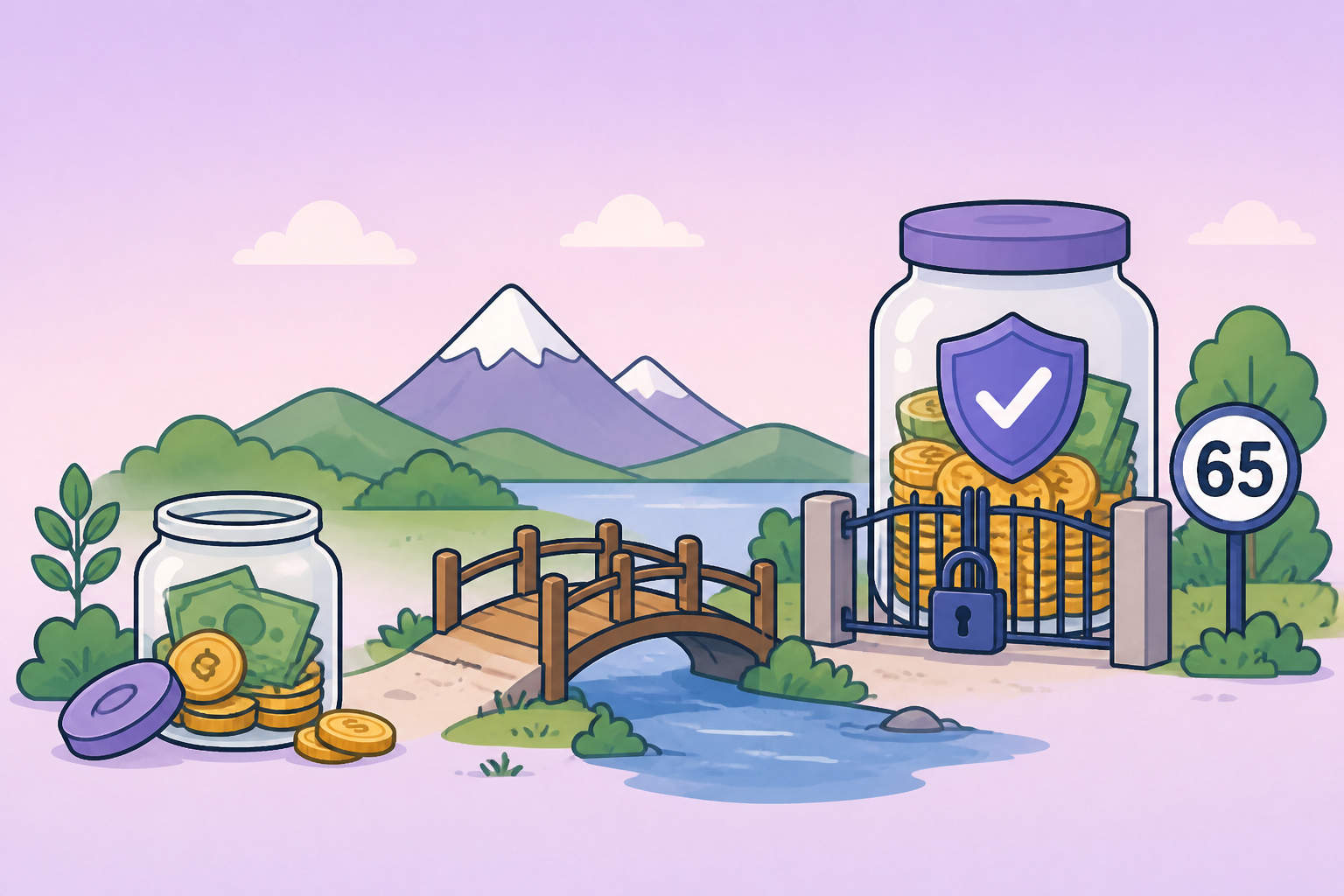
Imagine reaching your FIRE number at 50, only to realise a large part of it is locked inside KiwiSaver for another 15 years.
On paper, you might look ready to retire. In practice, you still need money for groceries, rates, power and everything else that happens before 65.
That gap is the part most overseas FIRE calculators miss. It is also why retiring early works differently in New Zealand.
Fireball is built around that changing picture. It brings your actual spending, accessible investments, KiwiSaver, property and debt into the same FIRE plan, so the result is based on more than one number entered once.
The problem isn’t how much you have. It’s when you can use it
KiwiSaver is a powerful part of a retirement plan, but it is not usually money you can use whenever you like. Under the current KiwiSaver rules, most people gain access at 65, apart from limited early withdrawal situations.
If you want to leave full time work at 50, a $500,000 KiwiSaver balance does not pay next month’s bills. You need another pool of money that is accessible now.
This does not make KiwiSaver less valuable. It simply gives it a different job. Your accessible investments carry you to 65. KiwiSaver helps fund the years after that.
Think of early retirement as two separate phases
Before 65
These are the bridge years. Your living costs need to come from money you can actually reach: cash, term deposits, investments outside KiwiSaver, rental income, part time work or some combination of them.
The earlier you stop working, the longer that bridge needs to be. Someone retiring at 60 has five years to cover. Someone retiring at 50 has fifteen.
From 65
At 65, the picture changes. KiwiSaver generally becomes available and, if you meet the eligibility rules, NZ Super can begin covering part of your living costs.
Your portfolio no longer has to do all the heavy lifting. That is why a good New Zealand retirement plan should not use the same withdrawal amount forever. The years before 65 and the years after 65 are different problems.
You can get a useful first estimate with Fireball’s free KiwiSaver gap calculator. It shows how KiwiSaver and NZ Super could compare with the retirement income you want. Treat it as a snapshot, because the answer will change as your life and finances change.
How much do you need outside KiwiSaver?
A rough starting point is to work out your annual shortfall and multiply it by the number of years until 65.
Say you want to step away from full time work at 55 and expect to spend $60,000 a year. You are happy to earn $20,000 from part time work, leaving $40,000 for your investments to cover. Over ten years, that is a rough bridge of $400,000.
That is not a final target. Investment returns, inflation, tax, fees and changing spending all affect the result. But it immediately answers the important question: are you building money you can use before 65, or is everything going into a fund you cannot yet touch?
Your bridge can also change because life does. You might move house and take on a different mortgage or rent, replace a car, support family, face higher insurance or health costs, or decide that travel matters more. Each change can raise or lower your annual expenses, which changes both the bridge you need and your likely FIRE date.
A standalone FIRE calculator does not know that any of this has happened. It keeps showing the old answer until you remember to update every input. Fireball can use connected transaction and balance data to keep spending and wealth grounded in your current financial picture, while still letting you change future assumptions as your plans evolve.
What counts as accessible money?
Accessible money is anything you can realistically use during the bridge years without relying on a special withdrawal approval. For many people, that means a cash buffer alongside investments held outside KiwiSaver.
Your home is different. It may be your largest asset, but it will not pay for retirement unless your plan includes selling, downsizing, renting part of it out or borrowing against it. A FIRE calculation that quietly treats the family home as spendable wealth can make you look much closer than you really are.
Fireball keeps your home and investable wealth distinct. It can account for your property and mortgage without pretending the home you live in is cash available for retirement.
What if most of your savings are already in KiwiSaver?
You have not ruined your chances of retiring early. You have simply discovered which part of the plan needs more attention.
You might build accessible investments from future savings, move the date slightly, keep some part time income, reduce the mortgage first or choose a combination that feels realistic. Even a small amount of ongoing income can dramatically reduce the size of the bridge.
This is where experimenting becomes useful. What happens if you work two days a week? What if the mortgage is gone before you finish full time work? What if you retire at 57 instead of 55? Fireball lets you change retirement age, expected spending and part time income so you can see how each choice affects the plan.
Where Fireball changes the calculation
Most simple FIRE calculators give you one large number. They do not distinguish between money in KiwiSaver, an accessible investment account and the house you live in.
Fireball separates those pieces. It identifies the investments available for the bridge, keeps KiwiSaver growing in the background, brings eligible NZ Super into the later stage and accounts for what is happening with your mortgage and home.
When you have not set a separate retirement spending target, Fireball uses your transaction history to estimate what you actually spend. As new transactions, balances, assets and debts are reflected in the app, your starting position can change too. You can then adjust future assumptions such as retirement spending, investment returns, KiwiSaver contributions and reliable part time income.
Instead of being told that you need one intimidating lump sum, you can see which years need funding and where that money is expected to come from. That is the difference between knowing your net worth and knowing whether you can actually afford to stop working.
The question worth asking
Do not just ask whether you have enough to retire. Ask whether you have enough money in the right places at the right time, and whether your plan still reflects the life you are living now.
KiwiSaver can be a huge part of your future without being the thing that gets you through your fifties. Fireball helps you build the bridge, revisit it as life changes and turn retiring before 65 from an attractive idea into a plan you can actually see.
Make the next money decision calmer
Turn what you just read into a plan you can track, adjust, and actually live with. Explore our free financial calculators or see how Fireball brings your finances together.