What is FIRE? How to calculate your FIRE number in New Zealand
Calculate your FIRE number using real spending, accessible investments, KiwiSaver, NZ Super and housing, then turn the estimate into a practical NZ plan.

Financial Independence, Retire Early or FIRE has gone from a niche internet forum idea to something people genuinely plan their lives around. If you’ve seen it on Reddit, heard it on a podcast, or met someone claiming they’ll quit work at 45, you’ve probably wondered the same thing: is that actually possible?
The short answer is yes. FIRE is about building enough invested wealth that work becomes optional. That doesn’t mean you have to stop working forever. You might cut back your hours, start something new, or keep working because you want to rather than because you have to.
How FIRE works
The idea is straightforward. You build enough invested wealth that the returns cover your living expenses. At that point, work becomes optional.
That doesn't mean retiring to a beach and doing nothing. Plenty of people who reach financial independence keep working, start something new, or spend time on things they couldn't prioritise before. The goal isn't idleness. It's having a genuine choice about how you spend your time.
How to calculate your FIRE number
FIRE planning comes down to one core relationship: how much you spend determines how much you need to save.
A common starting point is annual portfolio-funded spending multiplied by 25. That corresponds to an initial withdrawal rate of 4%: $60,000 of annual spending produces a $1.5 million estimate, while $90,000 produces $2.25 million. The 4% figure is a planning rule, not a guarantee. Tax, fees, inflation, investment returns, retirement length and future spending can all change the result.
Worked example: suppose your household expects to spend $72,000 a year. The simple calculation is $72,000 × 25 = $1.8 million. Treat that as a first estimate. Separate accessible investments from money generally locked in KiwiSaver, model the years before any eligible NZ Super begins, and account for whether rent or mortgage payments continue.
This is why budgeting sits at the centre of FIRE rather than on the edges. It's not just about saving more. It's about understanding what your actual lifestyle costs, because that number is your target.
| Annual Spending | FIRE number |
|---|---|
| $50,000 | $1.25 million |
| $60,000 | $1.50 million |
| $80,000 | $2.00 million |
| $100,000 | $2.50 million |
The important thing to notice is that FIRE is driven by spending, not income.
Two people earning the same salary can have completely different FIRE timelines depending on how much they spend and invest.
What's different in New Zealand
Most FIRE advice online is written for Americans. The basic idea still works here, but three things change the calculation: when you can access KiwiSaver, whether NZ Super will help later, and what happens with your home.
KiwiSaver creates a timing problem that overseas calculators often miss. If you want to stop full-time work at 50, you can’t rely on money that is generally available from 65. You need enough accessible investments to carry you through those 15 years while KiwiSaver keeps growing in the background.
Then the picture changes again at 65. If you’re eligible for NZ Super, it starts covering part of your living costs, so your investments no longer need to do all the heavy lifting. For many Kiwis, FIRE is really a two-part plan: build a bridge to 65, then draw less once KiwiSaver and NZ Super become available.
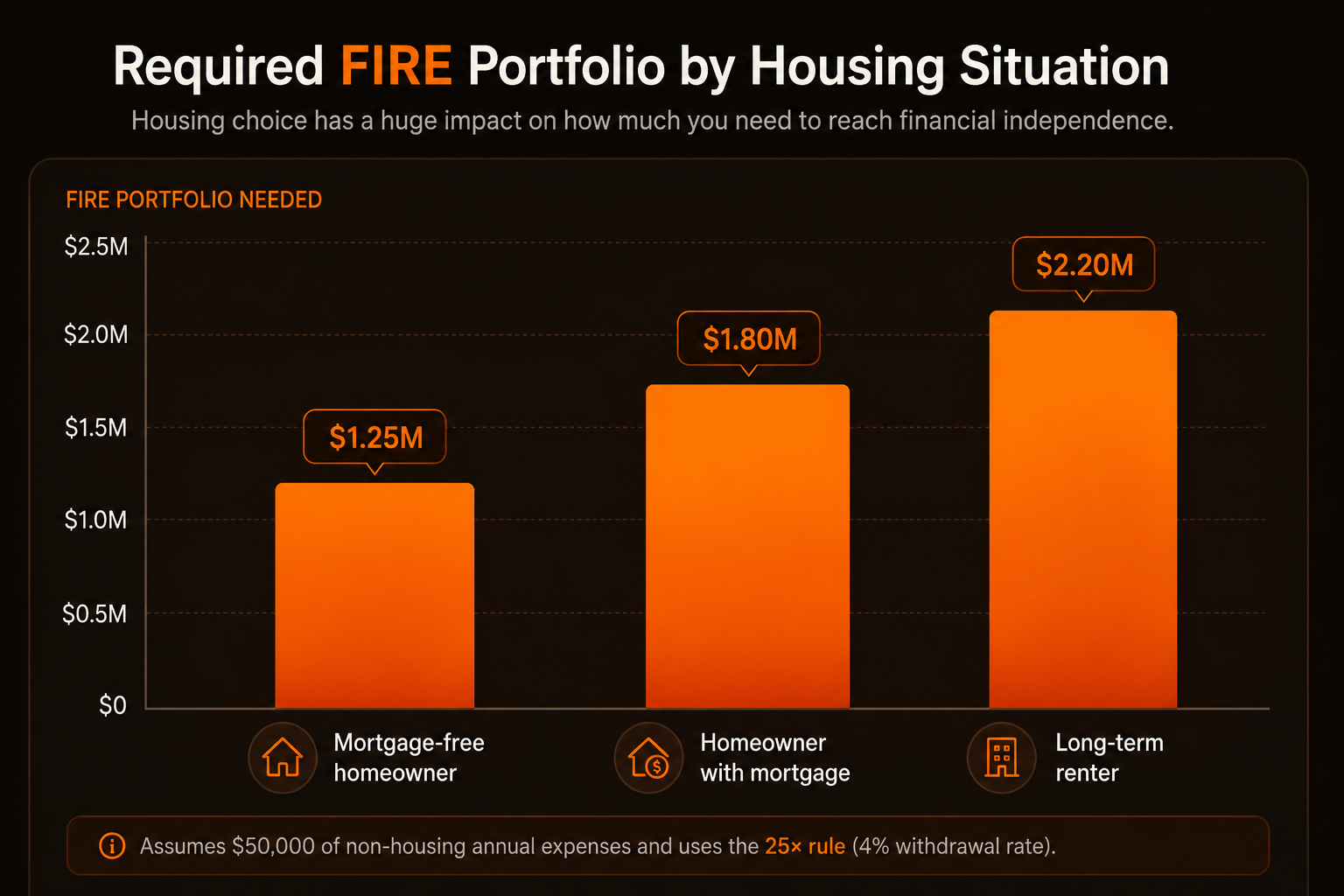
Your home matters too. Someone who reaches retirement mortgage-free needs a very different portfolio from someone who expects to keep renting or making repayments. Fireball treats accessible investments, KiwiSaver, NZ Super and housing as separate parts of the plan, so you’re not forcing a New Zealand retirement into an overseas calculator.
The variations worth knowing
Traditional FIRE is the baseline: you build enough invested wealth to cover your spending without needing income from work. From there, four common variations are worth knowing:
Lean FIRE is a minimalist approach with low spending and a smaller target. You can get there faster, but there's less buffer if circumstances change.
Fat FIRE targets a more comfortable lifestyle with more spending flexibility. It takes longer, but the retirement it funds looks closer to a high-income working life.
Coast FIRE is the point where the investments you already have are expected to grow into your full retirement fund by your chosen target age, without any more contributions. You still need income to cover life in the meantime, but the pressure to keep saving for retirement is gone.
Barista FIRE lets you step away from full-time work before your portfolio can cover everything on its own. Part-time or flexible income pays for some of your lifestyle, so your investments only need to cover the gap. Despite the name, the job doesn’t have to involve coffee.
Why your FIRE number is personal
The most common mistake in FIRE planning is borrowing someone else's assumptions. Your number depends on your spending, your assets, your timeline, and your goals.
Most calculators ask how much you spend, multiply by 25, and stop there. That's a starting point, not a plan.
Fireball takes a different approach. Rather than asking you to estimate your annual spending (most people guess wrong), it reads your actual bank transactions and calculates what you genuinely spend, filtering out transfers between your own accounts, credit card repayments, and investment contributions so the number reflects real expenditure rather than money moving around.
It also lets you set your own withdrawal rate and retirement assumptions rather than locking everyone into 4%. Some people are happy with a paid-off home and modest travel. Others want a more expensive retirement. Neither is wrong, and they cost different amounts.
NZ Super is factored in automatically, which reduces the portfolio size your investments actually need to support. If you're planning to retire before 65, Fireball handles the transition period separately, since those years look different to the years after NZ Super starts.
Coast FIRE is calculated alongside your main FIRE number. For a lot of people, seeing both figures at once is the thing that changes how they think about their timeline.
One other distinction worth making: total net worth and investable assets aren't the same thing. Your home might be your largest asset, but unless you plan to sell it, it won't fund your retirement. Fireball separates the two so your projections are based on what can actually generate income, not just everything you own added together.
Your FIRE number doesn’t need to be perfect on day one. Start with what you actually spend, think about what might change once you leave full-time work, and make sure you have enough accessible money to reach KiwiSaver and NZ Super. Then play with the assumptions. What if returns are lower? What if you work part-time? What if the mortgage is gone? Fireball lets you adjust those moving parts and see how your FIRE date changes, because a useful plan should change as your life does.
Make the next money decision calmer
Turn what you just read into a plan you can track, adjust, and actually live with. Explore our free financial calculators or see how Fireball brings your finances together.