Budgets that flex with real life
See what is safe to spend, keep every category on pace and adjust your plan when life changes.
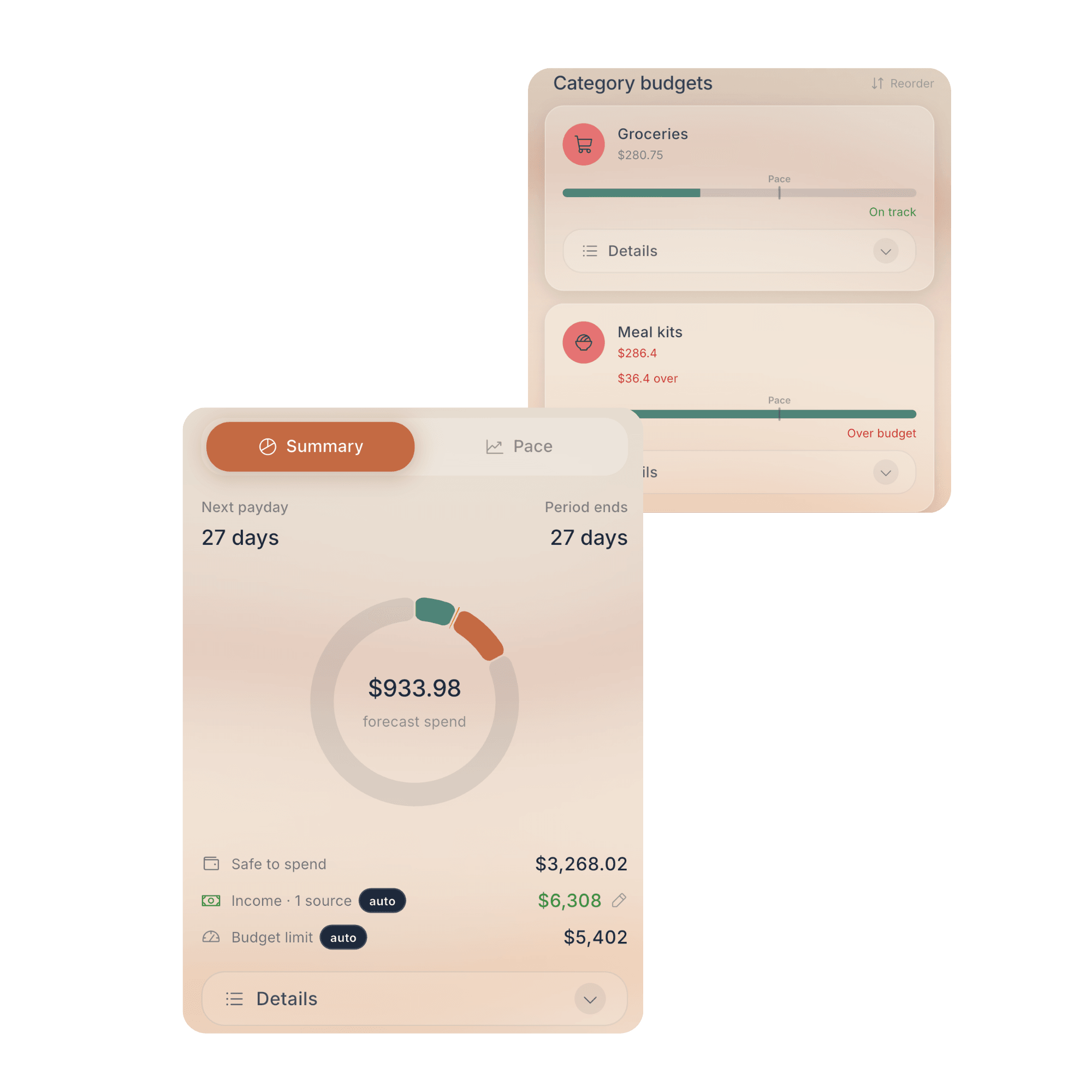
Set monthly limits, track subscriptions, and understand your spending patterns—without living in a spreadsheet.
Get StartedSee what is safe to spend, keep every category on pace and adjust your plan when life changes.
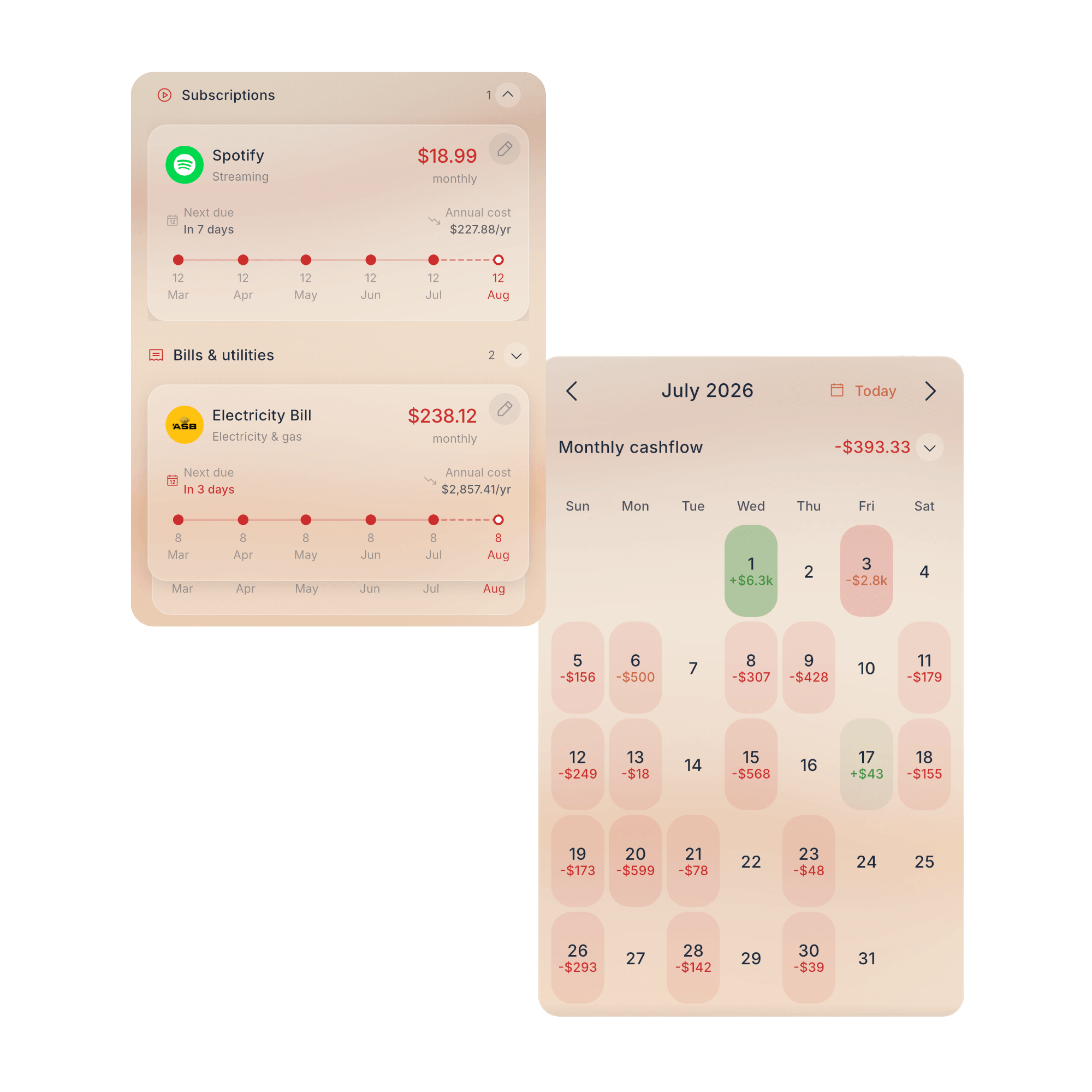
Subscriptions, repeating bills and the days they land stay visible, so your cash flow never catches you by surprise.
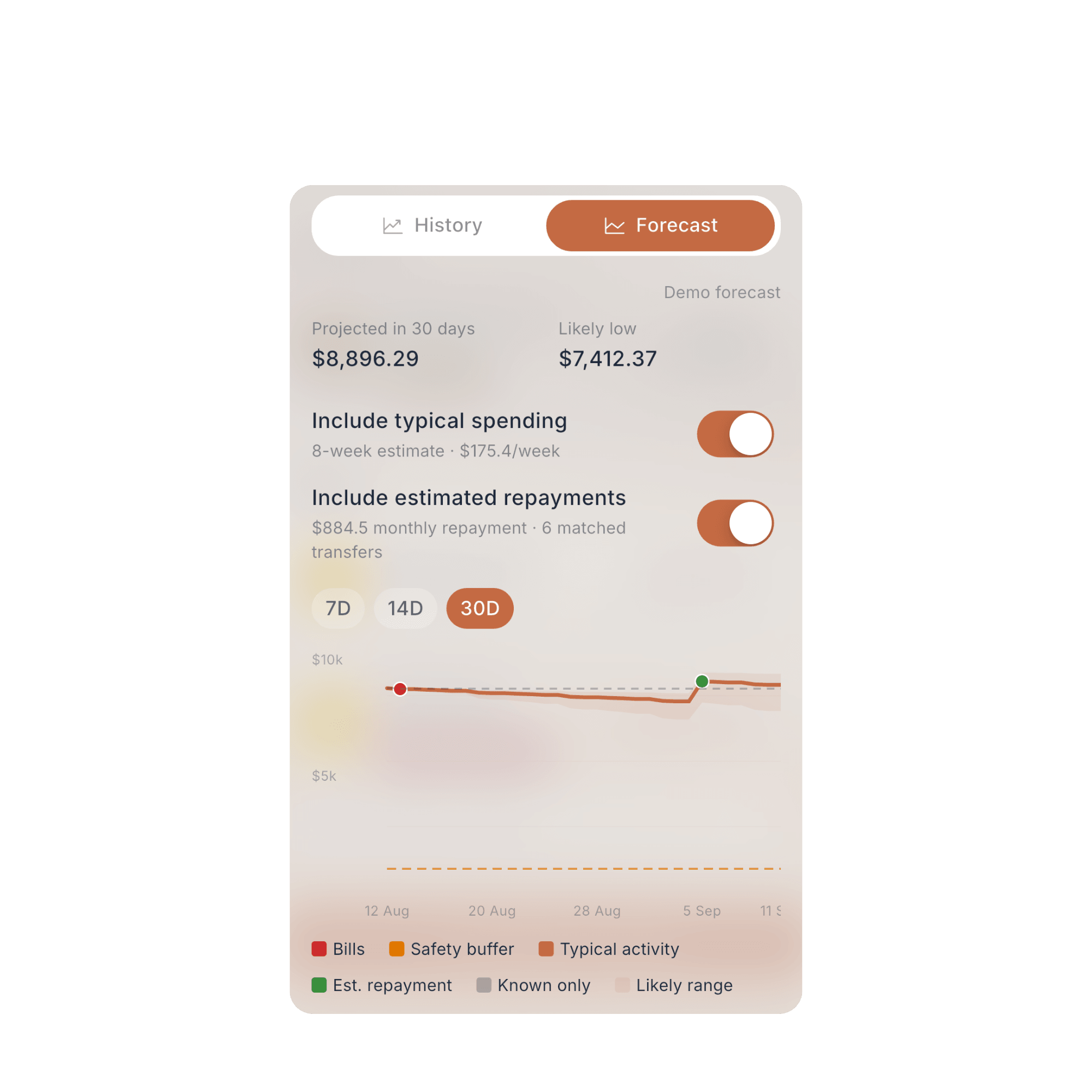
Forecast eligible balances and available credit 7–30 days ahead from known income, bills and transfers, then include typical spending and estimated card repayments based on recent activity.
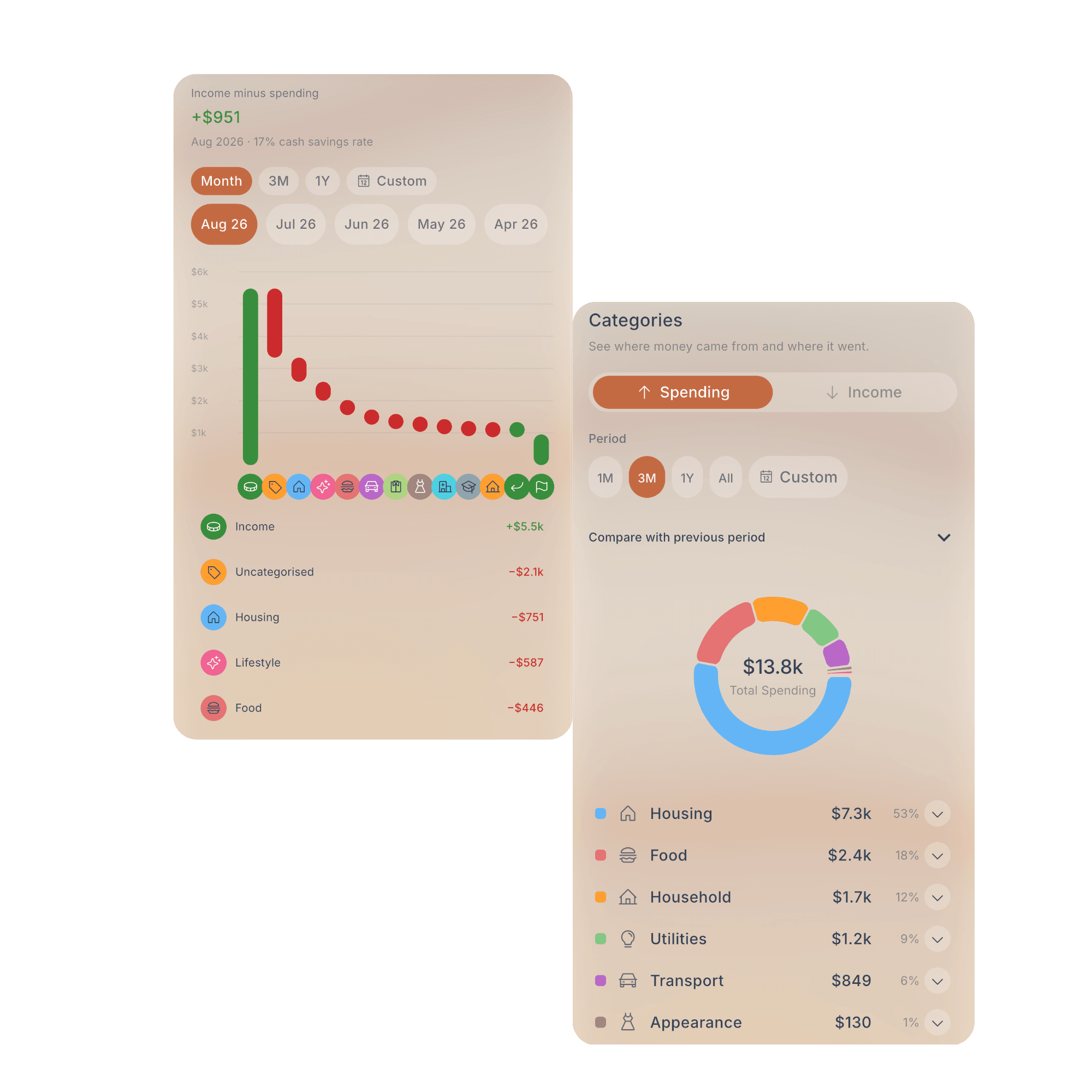
Follow every dollar from income to surplus and see which categories are shaping your spending.
Choose a single, flexible or category budget and add planning rules that match how you actually manage money.
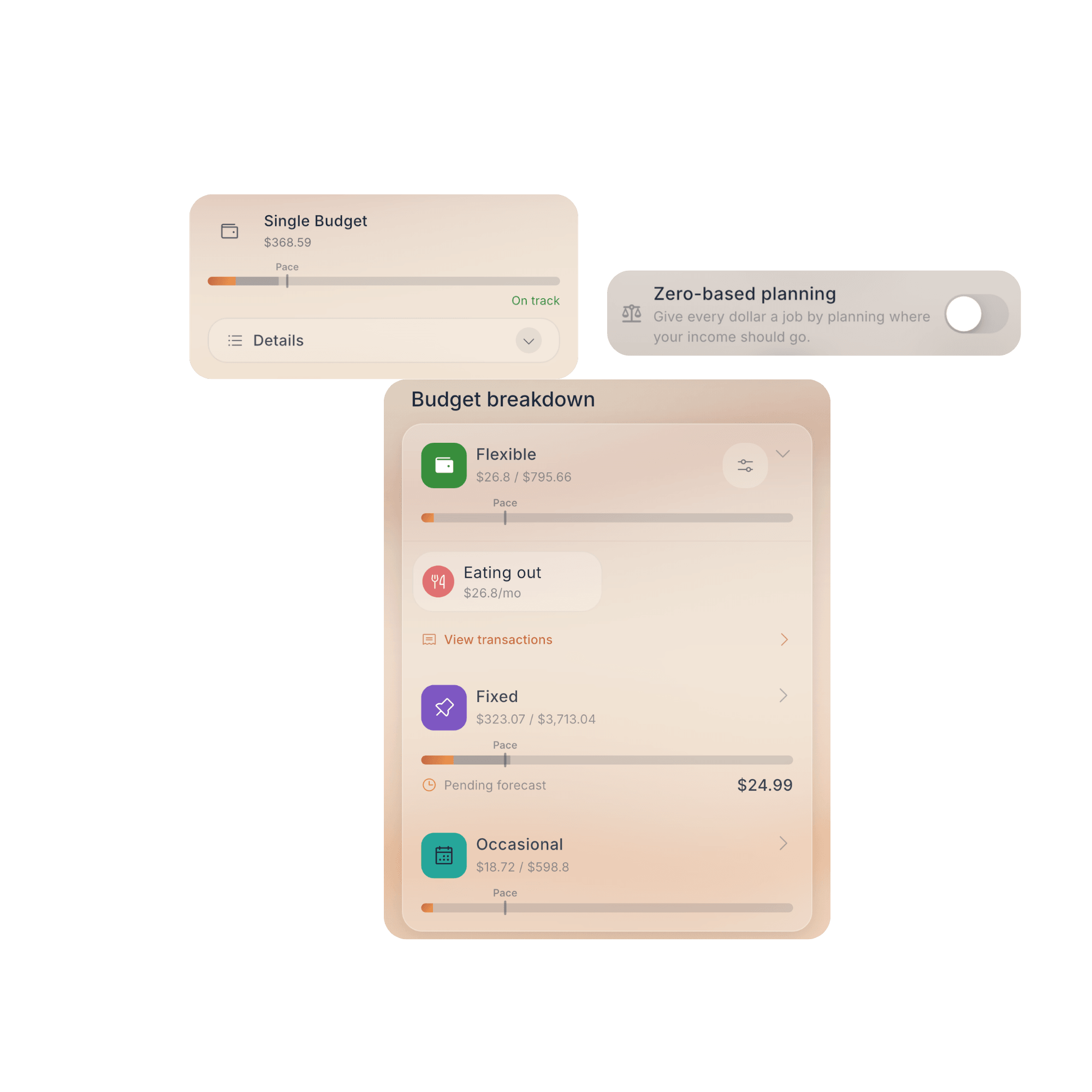
Zero based budgeting gives every dollar of income a job, so income minus planned spending, saving and investing equals zero.
The 50/30/20 budget splits take home pay into 50% for needs, 30% for wants and 20% for saving and paying off debt.
A sinking fund is money you put aside regularly for a known future cost, such as insurance, rates or a holiday.
An emergency fund is cash set aside for unexpected costs or lost income, often three to six months of essential spending.
The debt snowball pays off your smallest debt first while making minimum payments on the rest, then rolls that payment into the next smallest.
The debt avalanche pays off the debt with the highest interest rate first while making minimum payments on the rest.