How much money do you need to retire in New Zealand?
Work out how much you may need to retire in New Zealand by starting with your future spending, then allowing for NZ Super, KiwiSaver, housing and other income.
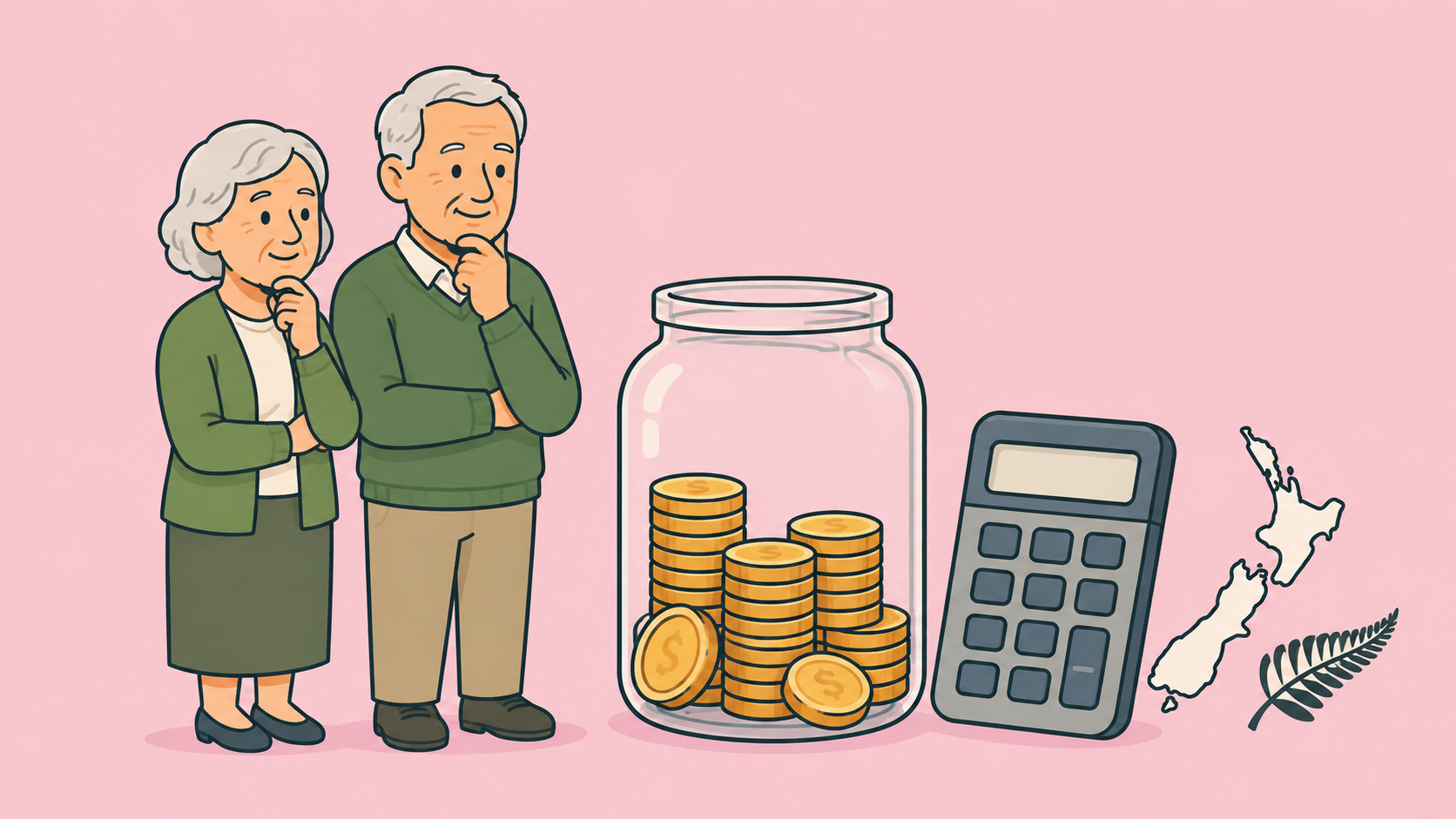
There is no single amount that every New Zealander needs to retire. A more useful answer is this: you need enough income from NZ Super, KiwiSaver, investments and any other sources to cover the life you want for as long as you may need it.
That means the calculation should start with spending, not with a headline number.
A homeowner who expects to spend $45,000 a year will have a different target from a renter who expects to spend $70,000. Someone retiring at 65 can plan around access to KiwiSaver and possible NZ Super. Someone hoping to finish work at 55 also needs money for the ten years before those sources are generally available.
The short answer
To estimate your retirement target:
- Estimate your yearly spending in retirement.
- Subtract reliable income you expect, including any NZ Super for which you may qualify.
- Estimate how much your savings and investments need to provide each year.
- Test whether your current KiwiSaver, investments and future contributions could support that gap.
- Allow for tax, fees, inflation, investment risk and a retirement that may last 25 to 30 years or longer.
This is a planning estimate, not a guarantee. Review it as your life and the rules change.
Start with the retirement you actually want
Imagine your ordinary week after paid work. Where will you live? Will you own your home without a mortgage? Do you want regular travel, restaurant meals or expensive hobbies? Will you still help family?
Separate your future costs into three groups.
Essential spending
This includes housing, food, power, transport, insurance, rates, health costs and basic household needs.
Comfortable spending
This might include holidays, hobbies, gifts, eating out, subscriptions and replacing a car.
Irregular costs
A weekly budget can overlook house repairs, dental treatment, appliances and other large costs that do not arrive every month. Convert an estimate for these costs into a yearly amount.
Your retirement budget does not have to be perfect. It needs to be realistic enough to test.
Include NZ Super, but check your eligibility
NZ Super is a fortnightly payment for people aged 65 and over who meet the eligibility requirements. Residence rules apply, and the number of years required depends on your date of birth. You can keep working while receiving it.
Check the current criteria with Work and Income. Do not assume eligibility if you have spent significant time overseas.
The payment rate can change. Use the current rate that fits your living situation when making a detailed plan, then update it over time.
NZ Super may cover part of your expected spending. Your own retirement money needs to cover the remaining gap.
Work out your yearly retirement gap
Suppose Hana and Wiremu expect to spend $62,000 a year after tax in retirement. Together, they estimate that eligible NZ Super payments would cover $42,000 of that spending at current rates.
Their estimated gap is $20,000 a year.
That does not mean they simply multiply $20,000 by the number of retirement years. Some money may remain invested and earn returns, while inflation, fees and tax can reduce what those returns buy. The order of good and bad investment years can also affect how long the money lasts.
Fireball would be able to calculate the number needed to retire, with the pension rate in mind.
Why your home changes the answer
Housing is often the biggest reason two people need different retirement amounts.
If you expect to own a mortgage free home, you may no longer pay rent or a mortgage. You will still need to allow for rates, insurance, maintenance and repairs.
If you expect to rent, future rent needs to remain in the plan. Renters generally need more retirement savings because housing costs continue.
Home equity is part of net worth, but it is not automatically retirement income. Count it as spendable only if you have a realistic plan to sell, downsize or otherwise use it.
KiwiSaver is part of the plan, not the whole plan
KiwiSaver can become a major source of retirement money. Your future balance depends on contributions, employer contributions where applicable, investment returns, fees, tax, fund choice and withdrawals.
At 65, you can generally withdraw your KiwiSaver savings. You can also leave some or all of it invested. Inland Revenue explains the current rules in its guide to getting KiwiSaver savings when you retire.
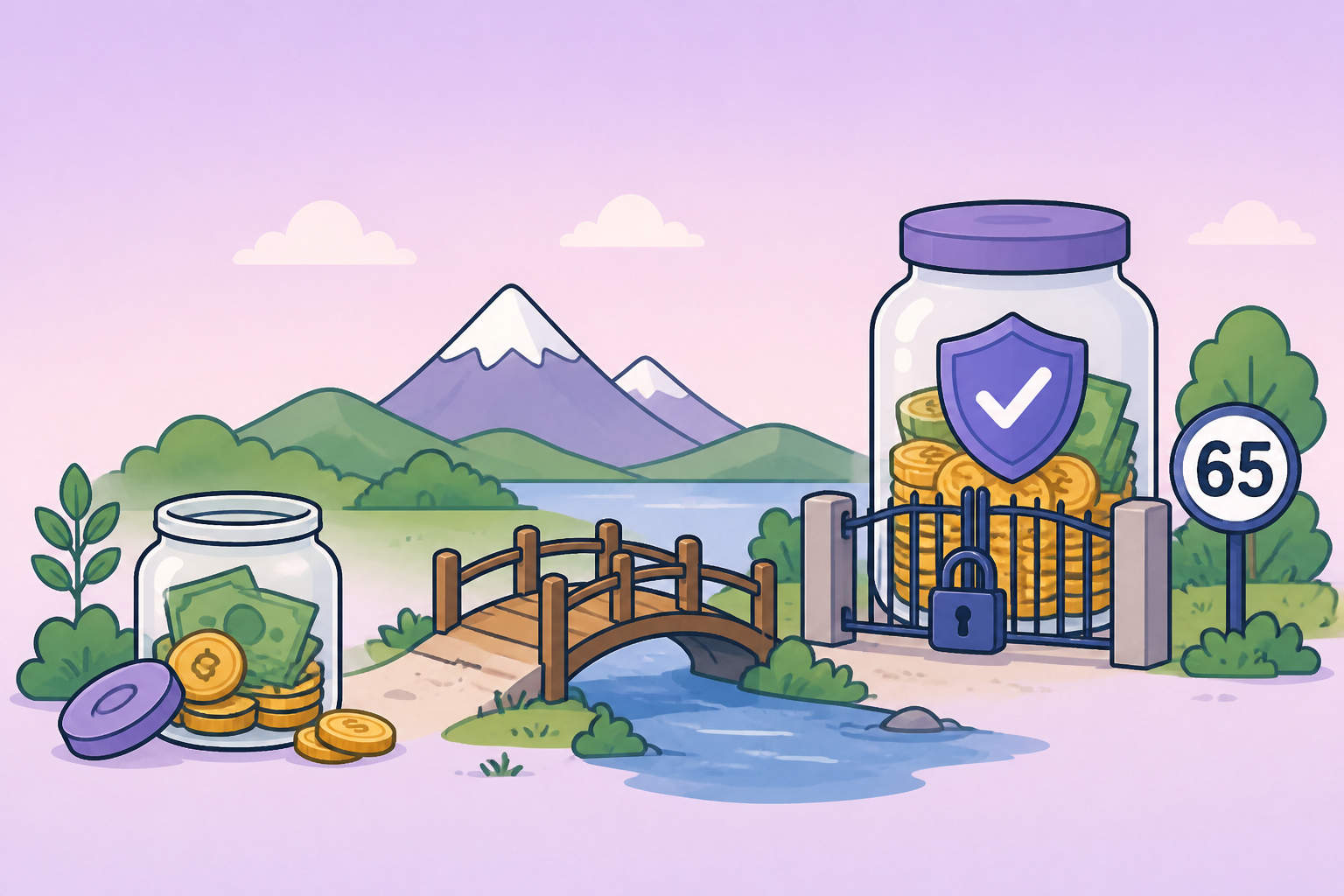
If you want to retire before 65, do not count KiwiSaver as money that will automatically fund the earlier years. Build a separate bridge from accessible savings and investments.
What about the four percent rule?
The four percent rule is a common shortcut. It suggests starting retirement by withdrawing about four percent of an investment portfolio in the first year, then adjusting the amount for inflation.
For example, a $20,000 yearly gap divided by 0.04 gives a rough portfolio estimate of $500,000.
This is not a promise that $500,000 will always be enough. The original research used particular markets, time periods and assumptions. Your tax, fees, asset mix, retirement length and spending flexibility may be different. Treat it as one scenario to test, not a universal New Zealand rule.
Three examples with the same age
A mortgage free homeowner
Moana expects modest spending, owns her home and plans to retire at 65. NZ Super may cover much of her essential spending, so her own savings mainly need to provide comfort, large repairs and a safety margin.
A renter
James expects similar day to day spending but will continue renting. His retirement target is likely to be higher because housing remains a major ongoing cost.
Someone retiring at 55
Aroha owns a home and has a strong KiwiSaver balance. She still needs accessible investments to cover ten years before age 65. Her plan must separate money for the bridge years from money available later.
The examples show why age alone cannot produce the right number.
How Fireball can help
A retirement estimate tells you how much you might need. Fireball helps you understand whether you are on track and what you could change.
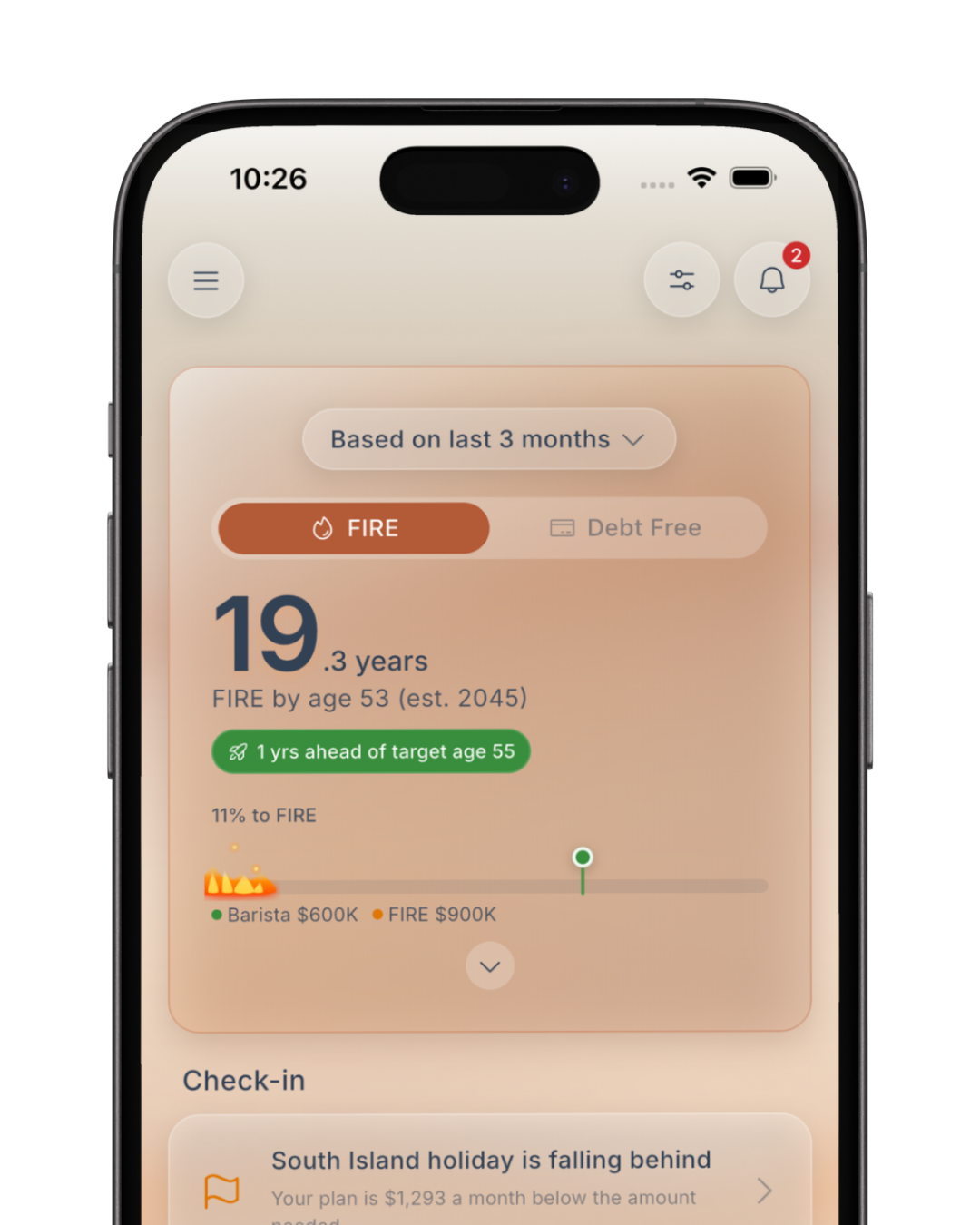
Fireball brings your spending, cash, KiwiSaver, investments, property and debts into one financial picture. Your FIRE Plan then turns that information into a personal retirement target and an estimated path towards it.
1. See your estimated FIRE number and retirement date.
2. Start with your recorded spending instead of guessing how much your lifestyle costs.
3. Include KiwiSaver, other investments, expected NZ Super, property, debt and other retirement income in one plan.
4. Try different scenarios and see how your path could change. For example, compare retiring at 60 with retiring at 65, investing more each month, reducing retirement spending or paying off your mortgage sooner.
5. Keep the home you live in separate from the investments available to fund retirement, so valuable property does not make your position look stronger than it really is.
No projection can predict the future. Fireball helps you stop relying on one generic retirement number and start exploring a plan based on your actual finances. As your money and plans change, return to your FIRE Plan, update your assumptions and see what those changes could mean for your future.
If the number looks impossible
Do not treat one large target as a verdict.
First, check the inputs. A monthly expense entered as a weekly expense can greatly inflate the result. Confirm your retirement age, spending, NZ Super, current assets and debts.
Then test one change at a time. Try a slightly later retirement date, a smaller spending target, higher regular contributions or a plan to clear debt before retirement.
If the gap still worries you, consider speaking with a licensed financial adviser.
Common questions
Is one million dollars enough to retire in New Zealand?
It may be more than enough for one household and not enough for another. The answer depends on spending, housing, retirement age, NZ Super eligibility, tax, fees and how the money is invested.
Can I retire on NZ Super alone?
Some people do, but whether it supports the life you want depends on your costs, especially housing. Compare the current payment with a realistic retirement budget rather than assuming it will cover everything.
Should I include my house in my retirement number?
Include your home when measuring net worth. Include its value in retirement funding only if your plan explains how the equity becomes spendable.
How often should I update my retirement plan?
Review it at least yearly and after major changes to income, spending, housing, relationships, health or retirement timing.
Your useful number is personal
The best retirement target is not the largest number you can find online. It is an estimate connected to your spending, housing, income sources and timeline.
Start with the life you want. Work out the gap. Then use the projection to choose the next action you can take today.
Make the next money decision calmer
Turn what you just read into a plan you can track, adjust, and actually live with. Explore our free financial calculators or see how Fireball brings your finances together.