What happens to KiwiSaver when you turn 65?
Learn what happens to KiwiSaver at 65, whether you need to withdraw it, how contributions change, and how to turn a balance into retirement income.
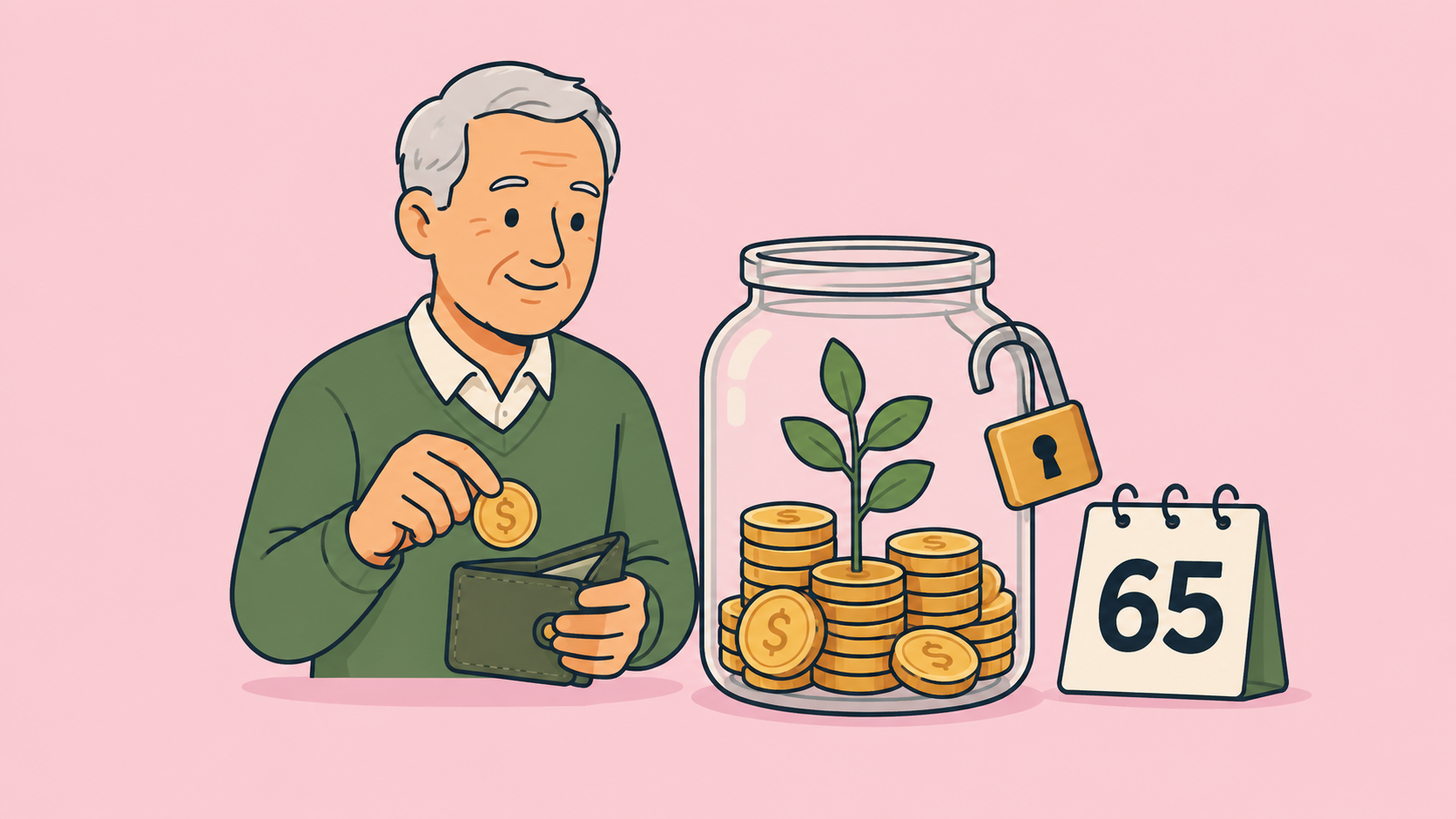
When you turn 65, you generally become eligible to withdraw all your KiwiSaver savings. You do not have to take the money out at once. You can leave it invested, withdraw some or withdraw all of it, subject to your provider's process and your scheme's options.
Your decision should be based on what the money needs to do next, not simply on reaching a birthday.
The short answer
At 65:
- You are generally eligible to access your KiwiSaver savings.
- You can usually keep the account and continue contributing.
- Your employer may stop contributing, depending on your employment agreement.
- You are no longer eligible for the government contribution.
- You should contact your provider for its withdrawal and retirement income options.
These rules are described by Inland Revenue. Check current information when you approach 65 because rules can change.
You do not have to withdraw everything
Turning 65 gives you access. It does not create a deadline to empty the account.
You may choose to:
- Leave all of it invested.
- Make occasional withdrawals for larger costs.
- Arrange regular withdrawals to support weekly or monthly spending.
- Withdraw some and keep the rest invested.
- Close the account by withdrawing the full balance.
Available arrangements vary by provider. Ask about minimum withdrawals, processing times, fees and what happens to the account after a partial withdrawal.
Can you keep contributing after 65?
Yes. Inland Revenue says you can still contribute after turning 65.
If you receive salary or wages, you can also stop employee deductions by giving your employer the relevant non deduction notice. If you later want to restart and remain a member, you can complete the required KiwiSaver deduction form.
Your employer may stop its contributions depending on your employment agreement. The government contribution is no longer available after 65.
That means a contribution plan that made sense at 64 may need to be reviewed at 65. Check the actual employer terms rather than assuming contributions continue.
KiwiSaver and NZ Super are different
KiwiSaver is your invested retirement savings. NZ Super is a government payment for people aged 65 and over who meet its eligibility requirements.
Access to one does not automatically confirm eligibility for the other. NZ Super has residence and other criteria. Check them with Work and Income.
You can generally receive NZ Super while working. You can also leave KiwiSaver invested while receiving NZ Super.
For retirement planning, treat them as two separate income sources with different rules.
Decide what job the money has
Before withdrawing, divide your retirement needs into timeframes.
Money needed soon
Cash for near term spending and emergencies should be accessible and stable enough for its job.
Money needed over the next several years
This might support regular withdrawals, travel, home maintenance or a planned purchase.
Money needed much later
Money that may remain invested for ten years or more has more time to recover from market falls, though returns are never guaranteed.
Keeping every dollar in the same fund can expose near term spending to more risk than intended. Moving everything to cash can reduce market risk but increase the risk that returns fail to keep pace with inflation over a long retirement.
Your provider or a licensed financial adviser can help you understand suitable options. Fireball does not recommend a particular fund or investment product.
An example of turning a balance into income
Suppose Mere has $240,000 in KiwiSaver at 65. She expects eligible NZ Super to cover most essential spending but wants another $12,000 a year for comfort and irregular costs.
Simply dividing $240,000 by $12,000 gives 20 years. That rough calculation ignores investment returns, tax, fees, inflation and changing withdrawals. It also assumes she is comfortable using the whole balance by 85.
Instead, Mere could test several plans:
- A regular withdrawal while some money remains invested.
- Smaller withdrawals in ordinary years and larger amounts for planned costs.
- Part time work for the first few years.
- Lower withdrawals after expensive travel years.
The aim is not to find a perfect prediction. It is to see how choices affect how long the money may last.
Should you change KiwiSaver funds at 65?
Age alone does not tell you the right fund.
Consider when you expect to use the money, how much of a fall you could tolerate, other income and investments, fees, and whether you can change spending during poor markets.
Someone withdrawing the full balance soon has a different timeframe from someone who expects part of it to remain invested for another 20 years.
The Financial Markets Authority explains that investment choices should consider risk, return and cost. Read its guide to deciding how to invest and review your provider's product disclosure information.
What if you keep working?
You do not have to retire at 65. You may keep working, receive NZ Super if eligible and leave KiwiSaver invested.
Check:
- Whether employee deductions will continue.
- Whether your employer will continue contributing.
- The tax code that applies to your salary and NZ Super.
- Whether continued investing still matches your withdrawal timeframe and risk.
If you do not understand how employment income affects tax or other assistance, check with Inland Revenue or Work and Income.
How Fireball can help with the transition
Fireball can show KiwiSaver as part of a wider retirement picture rather than as an isolated balance.
You can use your FIRE Plan to:
- Include KiwiSaver, other investments, cash, property and debt.
- Account for expected NZ Super and other retirement income.
- Test different retirement ages and spending levels.
- Compare what if scenarios for growth and withdrawal assumptions.
- Keep home equity separate from money available to fund regular spending.
- Update the plan as actual balances and spending change.
Fireball provides projections, not guarantees. Your provider remains the source of truth for your KiwiSaver balance, fund and withdrawal process.
Common problems at 65
My provider will not release the money immediately
Ask which eligibility evidence and forms are required, and how long processing normally takes. Do not commit the money to a purchase until you understand the withdrawal timing.
My employer contributions stopped
Employer contributions may stop after 65 depending on your employment agreement. Check your payslip, then ask your employer or payroll team about the contract and current rules.
My balance fell just before I planned to withdraw
Investment values can move. Contact your provider before making a rushed decision. Review how much you need now, what can remain invested and whether your fund still matches the withdrawal timeframe.
I do not know how much to withdraw each year
Start with your retirement budget and subtract reliable income such as eligible NZ Super. The remaining gap is the amount your savings and investments need to support. Model more than one lifespan and return assumption.
Common questions
Is KiwiSaver automatically paid out at 65?
No. You generally become eligible to withdraw it, but you need to contact your provider and choose what to do.
Can I withdraw KiwiSaver and continue working?
Generally, yes. Access is based on the eligibility rules, not on whether you stop paid work. Confirm your situation and provider process.
Can I leave KiwiSaver to my family?
KiwiSaver savings form part of your estate when you die. Estate administration and your wider wishes can be complex, so keep your will and estate plan current and seek legal advice when needed.
Do I still get the government contribution after 65?
No. Inland Revenue states that eligibility for the government contribution ends at 65.
Age 65 is a choice point, not a finish line
The important question is not whether you can withdraw KiwiSaver. It is how the money will support the rest of your life.
Understand the rules, decide what needs to remain accessible, and test how withdrawals work with NZ Super, other investments and your real spending.
Related reading
- How Much Money Do You Need to Retire in New Zealand?
- Can You Retire Early in New Zealand If Your Money Is in KiwiSaver?
- What Is FIRE? How to Calculate Your FIRE Number in New Zealand
Make the next money decision calmer
Turn what you just read into a plan you can track, adjust, and actually live with. Explore our free financial calculators or see how Fireball brings your finances together.