Why most budgets fail (and why it probably isn't your fault)
Most budgets don't fail because people lack discipline. They fail because they're too rigid for real life. Learn why budgets fall apart, and how a more flexible approach can help you build habits that actually last.
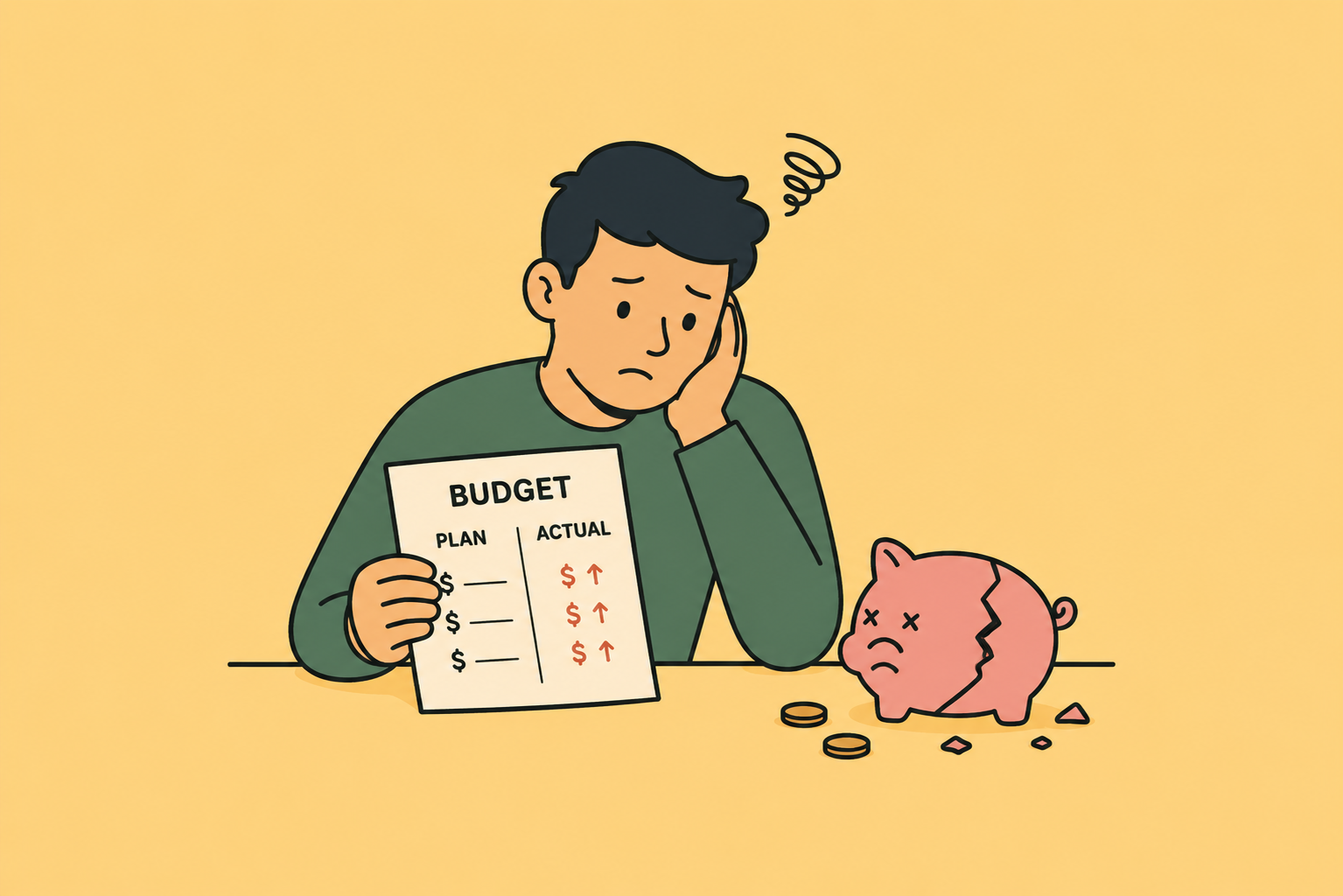
Maybe the problem isn’t your willpower. Maybe it’s the budget.
For a long time, we thought we were just bad at budgeting.
Like many people, we’d start each month with the best intentions. We’d sit down, decide how much we wanted to spend on groceries, eating out, shopping and everything else, and promise ourselves that this month would finally be different. For a while, it usually was. Then life happened. Someone would have a birthday, the car needed servicing, we’d book a weekend away or an annual insurance bill we’d completely forgotten about would arrive. Before long, the budget no longer reflected reality and, instead of adjusting it, we’d quietly stop looking at it.
At the time, we assumed the problem was us. We thought we simply lacked discipline. Looking back, I don’t think that was true at all. I think we were trying to fit a messy, unpredictable life into a budgeting system that expected every month to look almost identical. That’s an impossible standard, and it’s one that leaves a lot of people feeling like they’ve failed when they haven’t.
A good budget prepares for real life
The biggest shift for us came when we stopped expecting our budget to predict the future. A good budget isn’t about getting every number exactly right. It’s about helping you make good decisions, even when life doesn’t go according to plan.
Some expenses aren’t really surprises. Christmas comes every year. Insurance gets renewed. Cars need servicing. Birthdays somehow always arrive sooner than expected. Looking at one month makes these costs feel random, but looking back over your spending for the last twelve months usually tells a very different story. They’re simply part of the normal cost of living.
Of course, not every expense can be planned for. Cars break down unexpectedly, appliances stop working and sometimes life throws you something that nobody could have predicted. That’s why a good budget needs to do two things well. It should help you prepare for the expenses you know are likely to happen while still giving you enough flexibility to deal with the ones you couldn’t have planned for.
Three ideas that make budgeting easier
One of the simplest ways to reduce financial stress is to stop treating recurring expenses like emergencies. If you spent around $1,200 on Christmas last year, putting aside roughly $100 each month is usually much easier than finding the entire amount in December. The same idea applies to annual insurance, birthdays, holidays, vehicle servicing and countless other expenses that don’t happen every month but appear regularly over time.
It’s just as important to leave yourself some flexibility. No budget survives every surprise, and that’s perfectly okay. Depending on how you prefer to manage your money, that might mean keeping an emergency fund, leaving a small buffer in your monthly spending or simply being comfortable adjusting your budget when priorities change. The approach matters less than having a plan that can adapt without making you feel like you’ve failed.
Finally, judge your budget over months rather than days. One expensive weekend or one category going over budget rarely tells you much about your overall financial health. Looking at your spending over several months gives you a much clearer picture of your habits and whether you’re still making meaningful progress towards your goals.
That’s why we built Fireball differently
As we started building Fireball, we realised we didn’t want another budgeting app that simply told people they’d spent too much on restaurants or shopping. We wanted something that helped people make better decisions.
That’s why Fireball looks beyond this month’s transactions. By learning from your spending history, it can identify larger recurring expenses that appear year after year and help you gradually prepare for them instead of treating them as one-off surprises. If you’ve regularly paid annual insurance every July, serviced your car once a year or visited the optometrist every couple of years, those patterns become part of your financial plan rather than something you have to remember yourself.
At the same time, we know that no app can predict every surprise. That’s why Fireball is designed to support different budgeting styles instead of forcing everyone into the same system. Whether you prefer detailed spending categories, a single monthly spending target or a more flexible budgeting approach, the goal is the same: helping you make confident financial decisions while continuing to make progress towards your long-term goals.
Let the plan change when life changes
Fireball can use recent spending to recommend a starting budget, but the recommendation is not a rule. If Category spending stays higher or lower, Fireball may suggest that you review the budget. It never changes the amount automatically. Recurring activity and changed income details should also be reviewed before you decide whether the plan still fits.
For costs that build over several periods, Roll over unspent can carry unused category budget forward. This can be useful for annual bills, gifts, car repairs, or other costs that are real even though they do not arrive every month.
You can also change budgeting method. Start with Single Budget when one limit is enough. Use Flex Budgeting when you want fixed commitments and a savings target protected before flexible spending. Move to Category Budgeting when separate limits would help with particular areas.
A budget has not failed because you changed it. Updating the plan when the facts change is part of keeping it useful.
Progress beats perfection
One final thing we’ve learnt is that feeling like you’ve failed is one of the quickest ways to stop budgeting altogether. It’s easy to compare yourself with people online who seem to be saving more, investing more or retiring earlier, but you’re rarely seeing the full picture. Everyone has different priorities, different circumstances and a different idea of what a successful financial life looks like.
We don’t think a successful budget is the one that’s followed perfectly every month. We think it’s the one you’re still happy to use a year from now because it fits your life instead of fighting against it. If your budget helps you prepare for the costs you know are coming, gives you the confidence to deal with the ones you couldn’t have predicted and keeps you moving towards the future you want, then it’s doing exactly what it’s supposed to do.
Make the next money decision calmer
Turn what you just read into a plan you can track, adjust, and actually live with. Explore our free financial calculators or see how Fireball brings your finances together.