How to budget when your income changes every Month
A changing income does not make budgeting impossible. Set a dependable baseline, forecast recurring income and prepare for possible low balances.
Most budgeting advice begins with a neat monthly income. Real life is not always that tidy.
You might freelance, work changing shifts, earn commission, run a small business or receive income at different times. One month can feel comfortable and the next can feel uncomfortably tight. When there is no reliable number to start with, a traditional budget can feel like guesswork.
That does not mean budgeting cannot work for you. It just means your budget needs to handle uncertainty.
The aim is not to predict every month perfectly. It is to protect the important things in a quieter month and know what to do when you earn more.
Start with an income floor, not your best month
Look at the income that actually reached you over the last three to six months. If your work is seasonal, use a longer period so the busy and quiet months are both represented.
Find a cautious amount you can usually rely on. This is your income floor. It is not necessarily your lowest month ever, especially if that month was unusual. It should be a number that feels realistic without depending on a great sales month, extra shifts or an invoice arriving early.
For example, imagine your recent take home income was:
- $4,100
- $5,300
- $4,400
- $6,200
- $3,900
- $4,800
The average is about $4,780, but planning around $4,000 may be safer. You can always decide what to do with anything above that amount after it arrives.
If you have only just started earning irregularly, use your most cautious realistic estimate. Review it after a few months rather than pretending the first number will be perfect.
Work out your minimum month
Next, list the costs that keep life running. Think about housing, basic groceries, power, transport, insurance, minimum debt payments and other commitments you cannot easily pause.
This is not a punishment budget. It is your minimum month plan: the version you could follow temporarily if income was lower than expected.
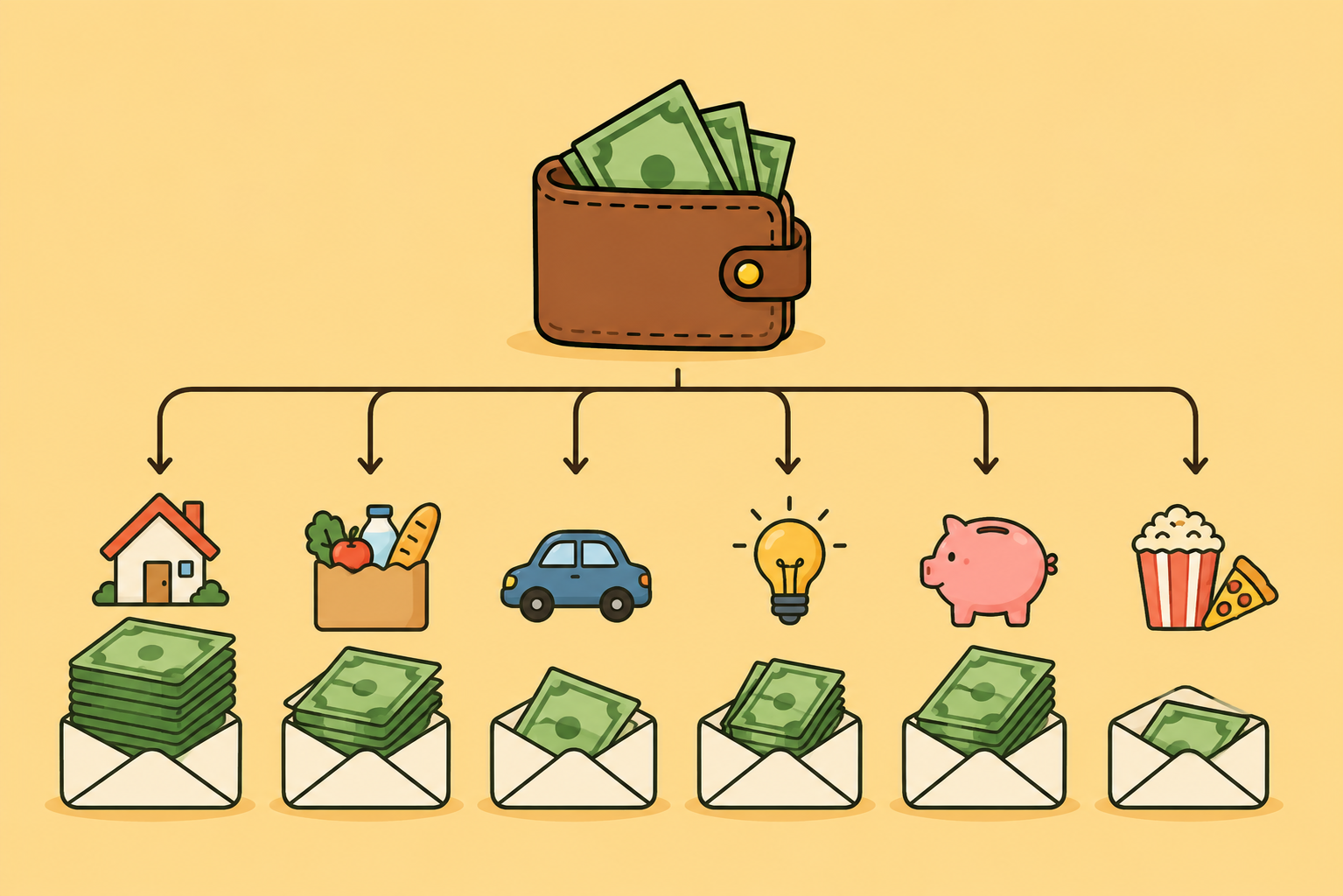
Put spending into three simple layers:
- Essentials and minimum commitments
- Important goals, such as building an emergency fund or paying more off debt
- Flexible spending, such as dining out, hobbies and shopping that can wait
The order matters. A month with lower income may cover only the first layer and part of the second. A stronger month can fund all three.
If your essential costs are already higher than your dependable income floor, the budget has shown you something useful. Look first at timing, bills that can be renegotiated and expenses that can be paused. Do not hide the gap by assuming next month will be better.
Give extra income a plan before it arrives
Better months are where budgets for changing income often come unstuck. After several tight weeks, extra money can feel completely available. Then a quiet month arrives and the money has already gone.
Choose an order for income above your floor. For example:
- Catch up on anything essential
- Set aside tax, if it has not already been deducted
- Refill your irregular income buffer
- Cover annual or occasional costs
- Add to savings, investments or extra debt payments
- Use some for spending you can enjoy without guilt
The exact order is personal. What matters is deciding while you are calm, not after the money lands.
Suppose you normally plan around $4,000 but receive $5,500 this month. The extra $1,500 is not automatically spending money. You might put $700 into your buffer, $300 towards an annual insurance bill, $300 towards a goal and keep $200 for something enjoyable.
Build a buffer between income and spending
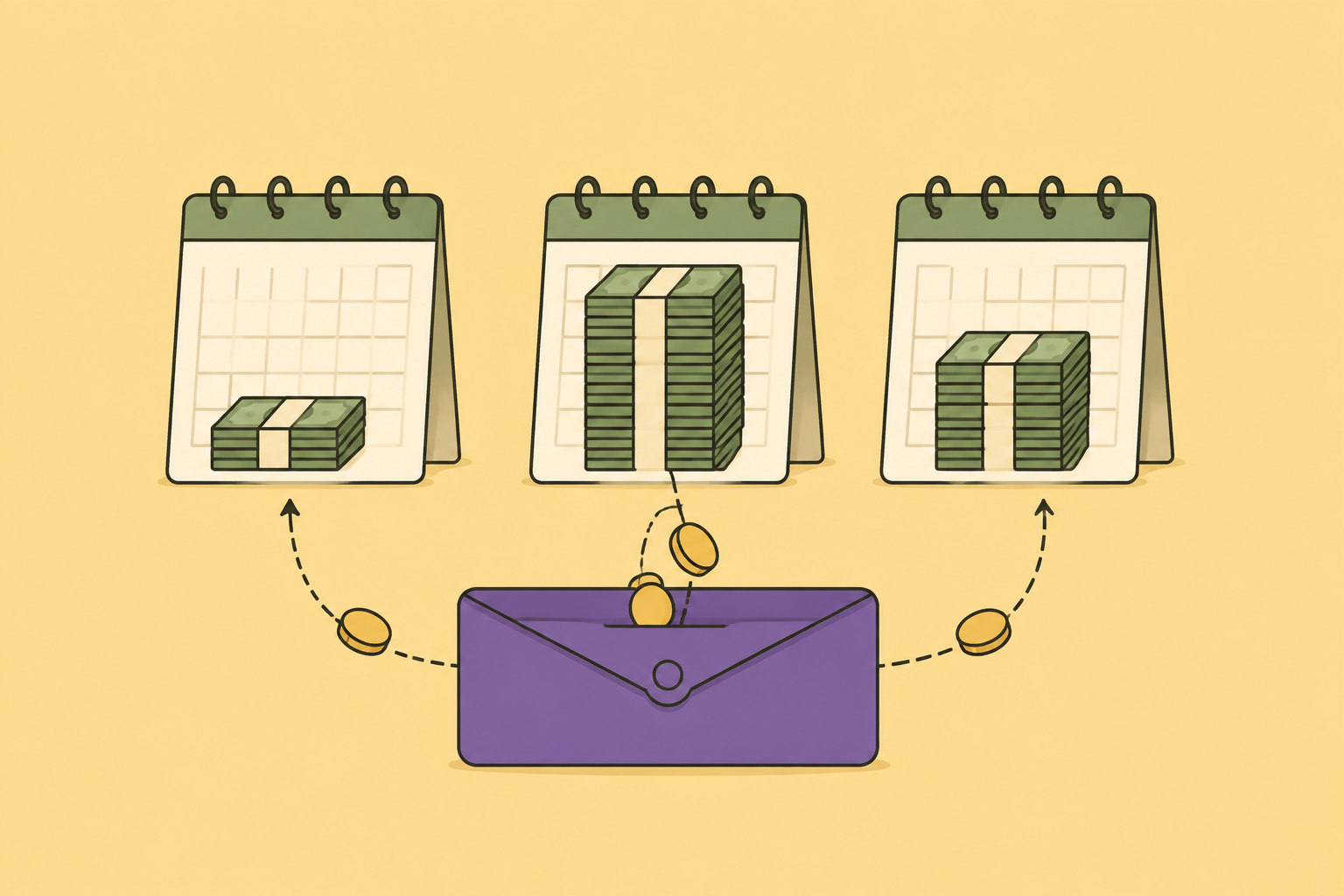
An emergency fund is for genuine surprises. An irregular income buffer has a more specific job: smoothing out expected ups and downs.
Start small. Even enough to cover one important bill can make a quiet month less stressful. Over time, aim to hold enough to bridge the gap between a typical month and a month with lower income. Some people eventually work towards keeping one month of essential expenses ready, but you do not need to reach that immediately.
Keep the buffer somewhere accessible and separate enough that it does not look like everyday spending money. When income is higher, add to it. When income is lower, use it for the purpose you created it for and rebuild it later without guilt.
If you are self employed or tax is not deducted before you are paid, keep tax money separate from this buffer. The amount you need depends on your circumstances, so use current guidance from Inland Revenue or a qualified tax adviser rather than guessing.
Budget money you have, not money you expect
An invoice, commission payment or promised shift is not available money until it has arrived.
You can record expected income to understand what may be coming, but avoid committing it to optional spending too early. Late payments are common, and a budget should reduce that pressure rather than add to it.
When money arrives, move through your chosen order:
- What needs to be paid before the next likely income?
- Does any tax need to be set aside?
- Does the buffer need topping up?
- What can safely go towards goals or flexible spending?
This turns each payment into a small decision instead of forcing you to predict the whole year.
Choose a budget period that matches your life
Monthly budgeting is still useful when income changes because many bills are monthly and it makes different months easier to compare.
If you are paid on a reliable weekly or fortnightly schedule but the amount varies, a matching weekly or fortnightly budget may feel more natural. If both the amount and timing change, a monthly view plus a cash buffer is often easier than trying to line every period up with an unpredictable payday.
Whichever period you choose, check what must be paid before the next income is likely to arrive. A good monthly total can still create stress if most bills fall due before you get paid.
How Fireball can help
You do not need to begin with the most detailed budget.
Fireball's Single Budget gives you one overall spending limit. It can be a good starting point when you first want to see whether your total spending fits within a cautious income floor.
Once you understand your patterns, you can choose a more detailed approach:
- Flex Budgeting starts with income, accounts for fixed costs and shows what remains for flexible spending. It can be useful when your available spending changes with your income.
- Category Budgeting lets you set separate limits for areas such as groceries, transport and entertainment.
- Zero based planning helps you give available income a job, including spending, goals and confirmed transfer commitments. With changing income, assign the money you actually have rather than building the plan around a month you hope to have.
Fireball can also detect possible recurring income from your transaction history. Review the amount, frequency and next payday before confirming it. A suggestion is there to help you plan; it is not a guarantee that the next payment will arrive on that date.
Use Insights to compare income and spending over time. After a few months, those patterns can help you adjust your income floor and spending limit using your real life rather than a generic rule.
Let Fireball watch the moving parts
Fireball uses recognised income in your recent connected transaction history to suggest a Monthly income average. This gives you a useful starting point when your pay changes, but it is still an average rather than a promise. Compare it with the cautious income floor you are comfortable using.
If newer transactions no longer match income details you reviewed, Fireball may show New income details found or mark the income as Detected changed. You can compare the newer amount, frequency and next payday with the details you saved. Fireball does not silently replace your reviewed details.
Once recurring income is confirmed, Fireball can show it in forecasts alongside known bills and transfer commitments. This helps you see whether income is likely to arrive before important payments are due. A forecast is based on the information Fireball currently knows, so late income, unexpected spending or a new bill can change the result.
You can also turn on Projected low balance alerts for selected eligible accounts and choose a safety buffer. Fireball uses the account's available balance and known upcoming bills, transfers and income. If the balance may fall below your buffer during the period you chose, it can warn you to review the forecast. It does not estimate everyday spending, so treat the alert as an early warning rather than a guarantee of the balance you will have.
Two common situations
You earn a salary plus commission
Build the core budget around your dependable salary. Decide in advance how commission will be divided between upcoming costs, your buffer, goals and flexible spending. This stops a strong commission month from quietly increasing the amount you feel you must spend every month.
You freelance and invoices arrive at different times
Plan around a cautious monthly floor and keep a list of bills due before the next likely payment. Treat unpaid invoices as expected income, not cash available to spend. When several invoices arrive together, refill the buffer before increasing optional spending.
What if this month is already too tight?
Start with the next few weeks, not a perfect annual plan.
- Check the money currently available.
- List essential payments due before the next likely income.
- Pause or reduce optional spending temporarily.
- Contact a provider early if you may miss a payment. Waiting usually gives you fewer choices.
- When income arrives, rebuild the plan from that real amount.
A variable income needs a flexible plan
A changing income can make money feel unpredictable, but your decisions do not have to be.
Begin with a cautious income floor. Protect the essentials. Give stronger months a purpose and build a buffer gradually. Then review the plan as your real income pattern becomes clearer.
The best budget is not the one that guesses next month correctly. It is the one that still helps when next month turns out differently.
Related reading
Make the next money decision calmer
Turn what you just read into a plan you can track, adjust, and actually live with. Explore our free financial calculators or see how Fireball brings your finances together.