How much should your emergency fund be?
Wondering how much you should keep in your emergency fund? Learn how much to save, why the "3 to 6 months" rule isn't right for everyone, and how to build an emergency fund that gives you real peace of mind.
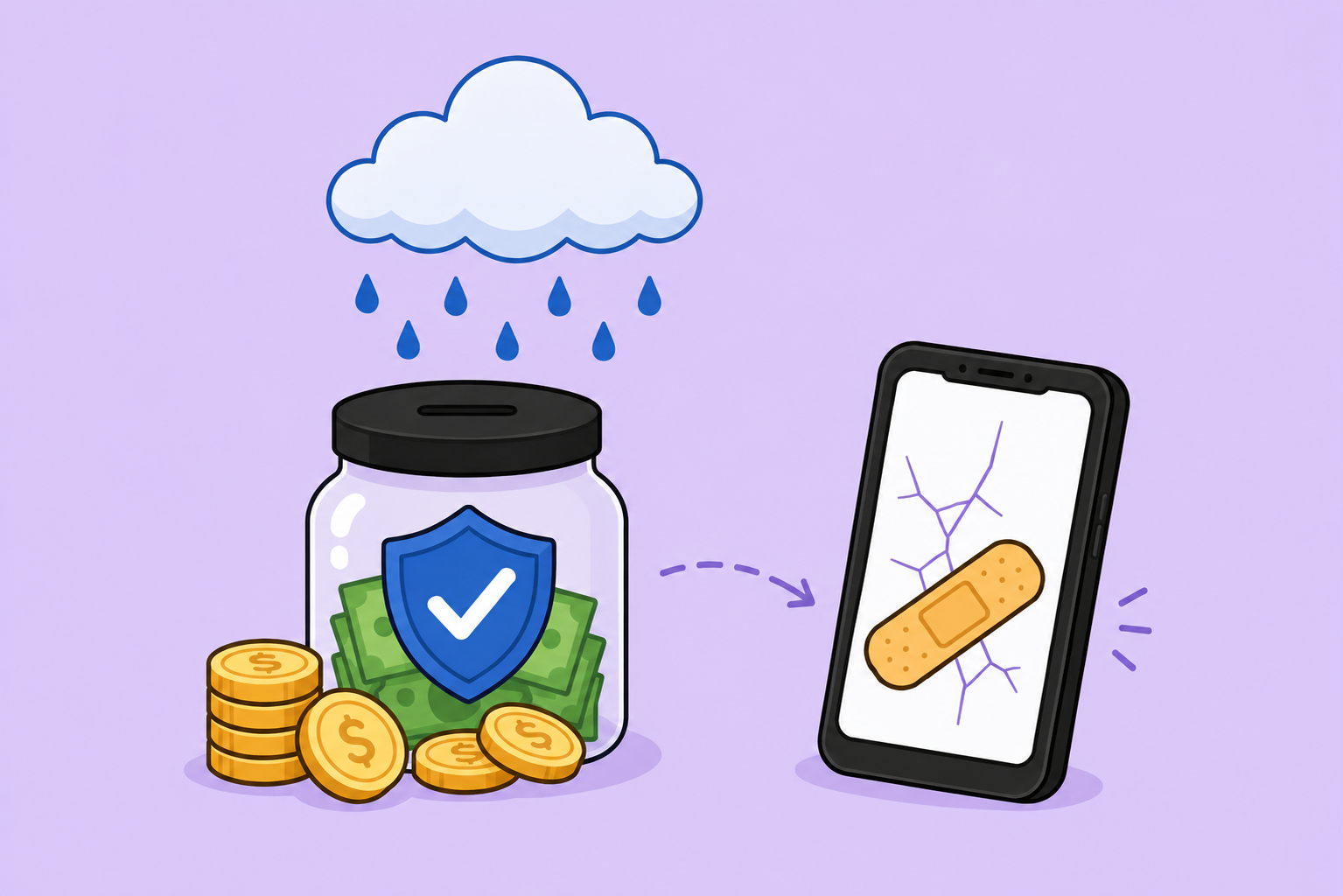
If you spend enough time reading personal finance blogs, you'll eventually come across the same piece of advice.
"You should have three to six months of living expenses saved."
It's one of those rules that's repeated so often it almost sounds like law. The problem is that it can also feel completely unrealistic, especially if you've only recently started budgeting or your savings account is sitting somewhere close to zero.
Imagine opening your banking app, seeing a few hundred dollars in savings, then reading that you should have another $20,000 tucked away "just in case." It's not particularly motivating. If anything, it can make you feel like you're already so far behind that there's no point trying.
We think there's a much better way to look at it.
An emergency fund isn't really about chasing a number. It's about buying yourself options and security when life doesn't go according to plan.
Life has a habit of being expensive at the worst possible time
Emergencies are frustrating because they never arrive when it's convenient.
The washing machine doesn't stop working the week after you've received your tax refund. Cars don't politely wait until you've finished paying off your credit card before deciding they need expensive repairs. If you've ever owned a pet, you'll already know they seem to have an incredible ability to find the most expensive object in the house to eat.
Then there are the bigger events that none of us like thinking about. Losing your job. Becoming unwell. Having to travel unexpectedly because of a family emergency.
None of these situations are unusual. They're simply part of life.
What turns them into financial emergencies isn't the event itself. It's having no money set aside to deal with them.
That's where an emergency fund changes everything.
Instead of reaching for a credit card or worrying about how you're going to pay next week's bills, you've already created a buffer between yourself and the unexpected. You still have to deal with the problem, but at least you're only dealing with one problem instead of two.
You're not saving for disasters. You're saving for peace of mind.
People often think an emergency fund is all about preparing for the worst. In reality, most emergency funds are never used for dramatic, life-changing events.
They're used for everyday surprises.
A tyre blows out. or The hot water cylinder stops working.
or Your laptop dies halfway through an important project.
The emergency fund quietly steps in, pays the bill and allows life to carry on.
That's why we think the real value of an emergency fund isn't measured by the balance in your savings account. It's measured by how much stress it removes from your life. Knowing you can absorb an unexpected expense without borrowing money is an incredibly reassuring feeling. It's one of those things you don't fully appreciate until you've experienced both sides of it.
So... how much is enough?
The famous "three to six months of expenses" rule is still a sensible place to aim eventually.
Notice the word eventually.
Too often people treat it like the starting point rather than the destination. If you're just beginning, your goal isn't to save six months of expenses.
Your goal is simply to have something.
Even your first $500 or $1,000 can make a meaningful difference. It won't solve every problem, but it'll cover many of the unexpected costs that catch people out. A broken appliance. An emergency trip to the vet. A last-minute flight to see family. Those are exactly the kinds of expenses that often end up on a credit card when there's no emergency fund in place.
Once you've reached that first milestone, the next target becomes much less intimidating. Build enough to cover one month's essential expenses. Then work towards three months. If your income is unpredictable or you're self-employed, you might eventually decide six months feels more comfortable.
You don't need to reach the finish line immediately.
You just need to be a little more prepared than you were last month.
Build your emergency fund in Fireball
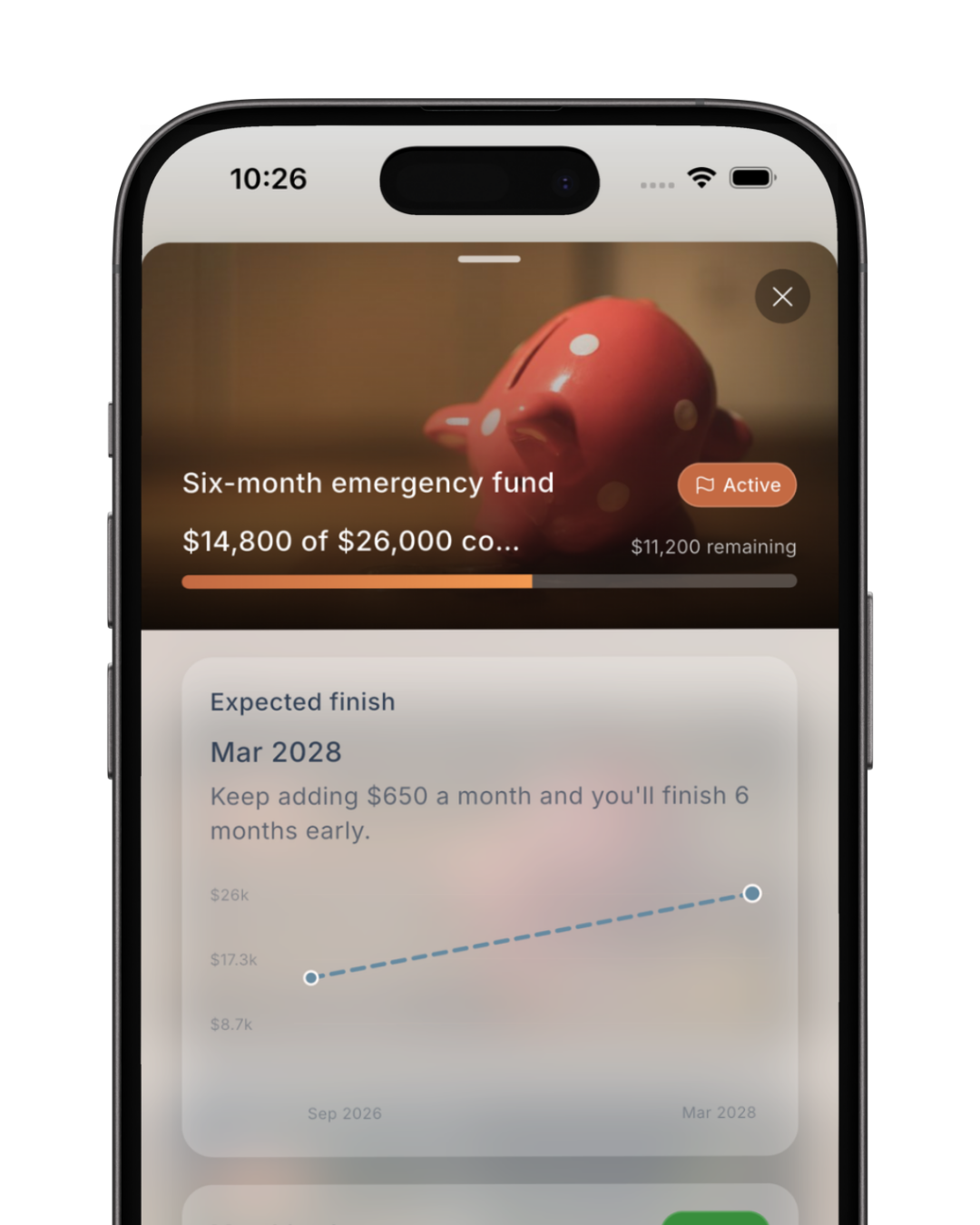
Fireball can be used as an emergency fund tracker, not only a place to view a savings account balance. Once you have chosen a starting target, create an Emergency fund under Save up. Add the amount you want to reach and, if it is helpful, a target date. Fireball can use the amount and date to suggest a monthly contribution and estimate when you could finish.
Next, tell Fireball which savings account or other eligible funding source belongs to the goal. You can count a fixed amount when only part of an account is your emergency fund, or the whole balance when that account exists only for emergencies. This does not move any money. It simply tells Fireball what should count as progress.
Leave Include in budget reserve turned on if you want the planned monthly contribution protected before Safe to Spend is shown. That helps stop money intended for your safety buffer from looking available for everyday spending.
When you add to the fund or need to use it, you can link the posted transaction to the goal as a contribution, withdrawal, or purchase. The goal then reflects what actually happened instead of assuming the balance only moves upwards.
Your emergency fund should match your life
One reason blanket financial advice can be unhelpful is that it assumes everyone's circumstances are the same.
They're not.
A single person with a stable government job probably doesn't need the same emergency fund as someone running their own business or supporting a young family. Someone with a dual-income household has a different level of risk from someone relying on one income alone.
That's why we don't think there's a perfect number.
Your emergency fund should reflect the amount of uncertainty in your own life, not somebody else's.
If having three months of expenses helps you sleep well at night, that's probably enough. If you'd feel more comfortable with six months because your income changes from month to month, that's perfectly reasonable too.
The goal isn't to satisfy a rule you found online. The goal is to give yourself confidence that you'll be okay if something unexpected happens.
Where should you keep it?
This is one area where keeping things simple usually works best.
Your emergency fund should be easy to access because emergencies rarely give you notice. A savings account or high-interest savings account is usually the right home for this money. It won't generate spectacular returns, but that isn't what it's designed to do.
People sometimes ask whether they should invest their emergency fund instead. It's an understandable question, particularly when investment returns can look much more attractive than savings account interest rates.
The problem is timing.
Imagine the share market falls sharply during the same month you lose your job. Suddenly you're forced to sell investments when their value has dropped because that's the only money you have available.
An emergency fund exists so you never have to make that decision.
Sometimes certainty is worth far more than a few extra percentage points of return.
Building an emergency fund isn't a race
If there's one idea we'd like you to take away from this article, it's that emergency funds aren't built overnight. They're built one payday at a time.
Some months you'll save a little more. Other months you'll barely add anything because life gets expensive. That's completely normal.
What matters isn't how quickly you reach three or six months of expenses.
What matters is that you're gradually creating a financial buffer that gives you more choices, less stress and the confidence to deal with whatever life throws at you next.
And that's really what an emergency fund is for. "Not preparing for the worst.
Making sure the unexpected doesn't become overwhelming.
Related reading:
Make the next money decision calmer
Turn what you just read into a plan you can track, adjust, and actually live with. Explore our free financial calculators or see how Fireball brings your finances together.