Flex Budgeting: A simpler way to stay on top of your money
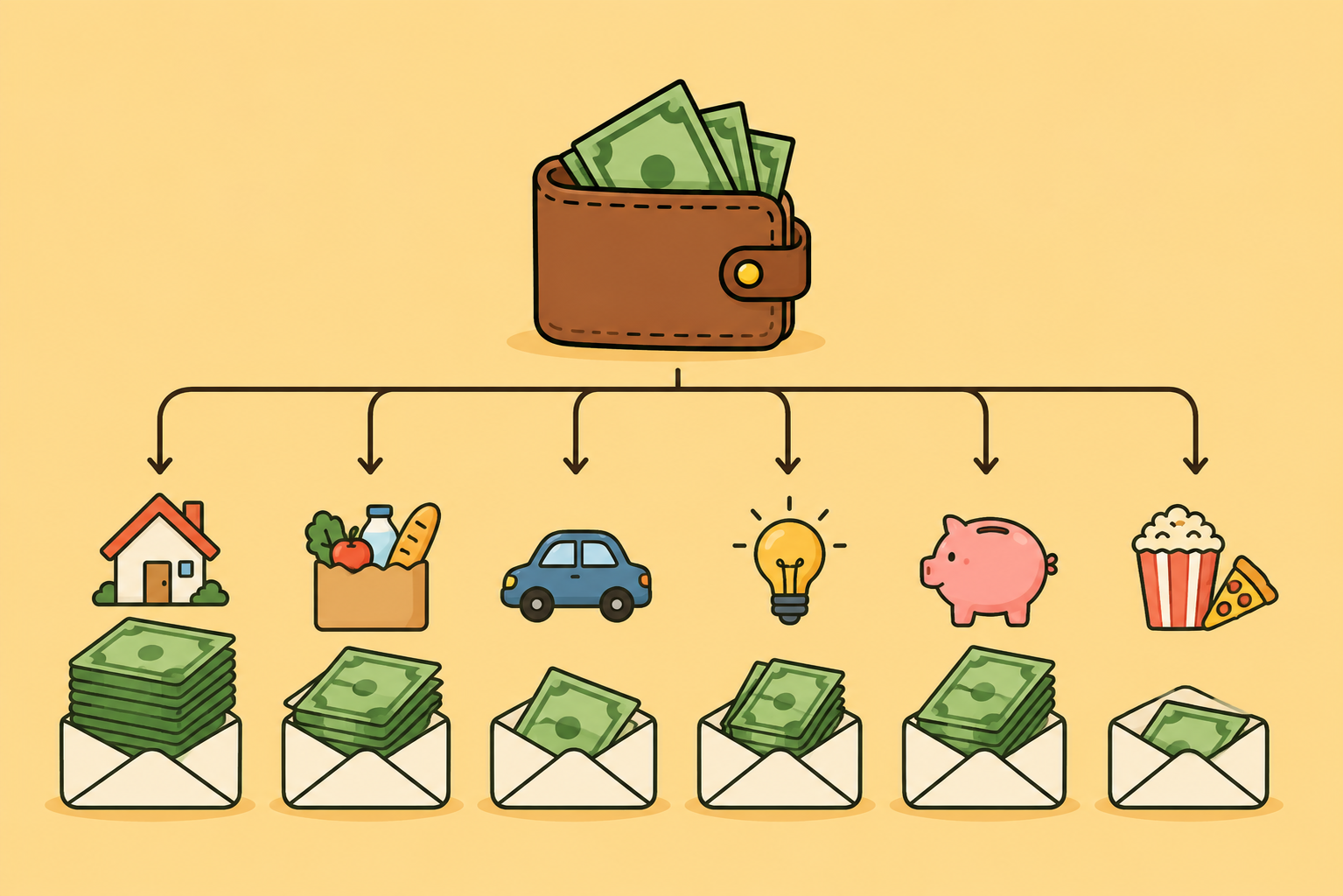
Most people don't overspend on anything obvious. The money just goes. Flex budgeting gives you one number to watch each month — what you have left after everything important is already covered.
A simpler way to stay on top of your money
Most people who feel like they're bad with money aren't. They just don't have a clear picture of how much they can actually spend on day-to-day stuff once the fixed costs are covered. The money goes out, the month ends, and it's hard to say exactly where it went.
Flex budgeting is one way to fix that. Not the only way, but a good one for people who want something simple. The idea is to work out one number — how much you have left to spend freely this month — and track that instead of a dozen separate categories.
How it works
The first step is splitting your expenses into three groups.
Fixed expenses are predictable. Rent, mortgage, insurance, subscriptions, loan repayments, utilities. These go out every month and don't require much thought once you've added them up.
Non-monthly expenses are trickier. Car registration, dentist visits, Christmas, a new tyre, an annual insurance renewal. None of these show up every month, but most of them show up every year, and they have a habit of arriving at the worst possible time. The way around this is to estimate the full year's worth, divide by twelve, and set that amount aside each month before calculating anything else. The car service in March stops being a surprise.
Flexible expenses cover everything that's left — groceries, petrol, eating out, clothes, weekend plans. These are the ones that actually vary, and the ones there's real room to adjust.
The number itself
Once those three groups are sorted and savings goals are factored in, the calculation is:
Income - fixed expenses - non-monthly expenses - savings = flex number
Savings go in before the flex number is calculated, not after. Otherwise they tend not to happen.
What's left is the flex number. The whole point is that groceries, petrol, takeaways, and a spontaneous purchase all come out of the same pot. No need to decide which category the flowers belong to, or whether the parking ticket counts as transport or miscellaneous. It all just comes off the total.
A weekly figure can make this easier to keep track of in practice. Divide the monthly number by 4.3 — months average out to about 4.3 weeks — and there's a figure to check against whenever it's useful.
How Flex Budgeting works in Fireball
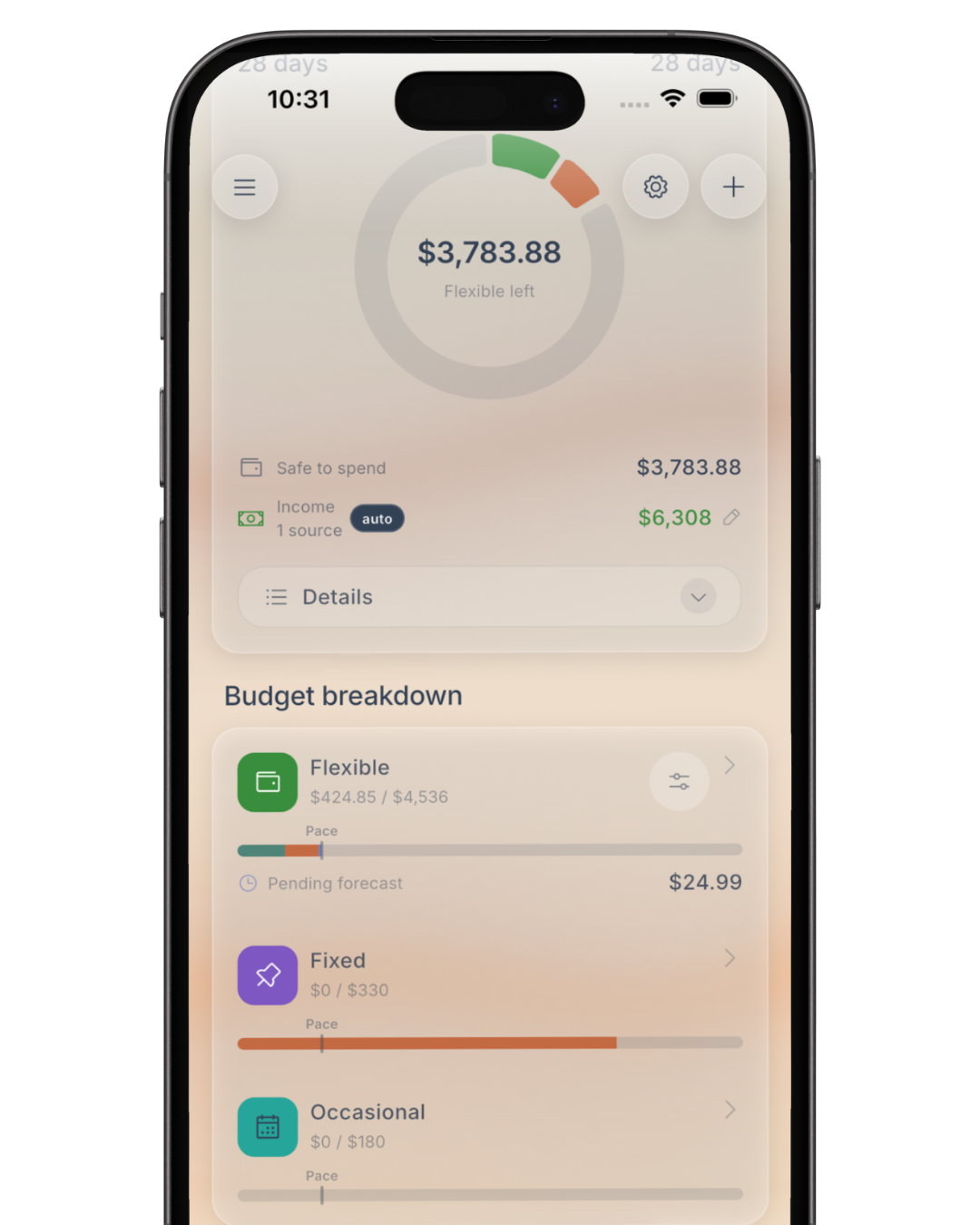
Fireball is an NZ budgeting app with a dedicated Flex Budgeting method, not just a category budget with fewer categories. Start with the income you want to plan around, then organise categories into Fixed, Occasional, and Flexible spending.
Fixed covers commitments such as rent, insurance, and subscriptions.
Occasional gives less frequent costs such as car servicing, gifts, or annual bills a place in the plan.
Flexible groups the spending that can change, such as groceries, petrol, eating out, and shopping.
You can also choose a target Cash Savings Rate. Fireball accounts for the fixed and occasional commitments and that savings target, then calculates the amount left for flexible spending. If your income changes, the flexible amount can change with it instead of forcing the whole budget to stay frozen.
You still keep the category detail underneath the flexible total. That means you can enjoy one simple number during the week and open the breakdown when you want to understand where it went.
Fireball may use your transaction history to suggest useful starting amounts and identify recurring activity for review. Treat those as starting points, not instructions. A suggestion can save time, but the final budget should reflect the costs and priorities you actually have.
When one budget needs more this period
Plans change. If one area needs more money this period, you can use Move budget instead of changing your whole Flex Budget setup.
For example, imagine your Car servicing budget needs another $100 and you still have $100 available in Flexible spending. Select Move budget, choose Flexible under From, choose Car servicing under To, then enter $100.
You can move available budget:
- Between Flexible and a Fixed or Occasional budget
- Between individual Fixed and Occasional budgets
The change applies only to the current budget period. It does not move real money between your bank accounts or permanently change where a category belongs.
You cannot move more than the amount currently available. To remove the adjustments, select Reset moves.
This is useful for an unusual month or an unexpected expense. If the same adjustment is needed regularly, edit your normal budget amounts instead.
The part that usually trips people up
The non-monthly estimate. It's consistently underestimated, mostly because those costs aren't visible when the budget is being set up. Then something breaks, or a subscription renews, and the flex spending takes the hit. The month ends up tight without an obvious reason.
Looking back through a full year of transactions gives a much more accurate baseline than guessing. If your accounts are connected in Fireball, it picks up recurring and non-monthly patterns automatically, so the estimate is based on what actually happened rather than what seems about right.
Flex budgeting vs category budgeting
Category budgeting works differently. Instead of one number, you set individual limits for groceries, eating out, entertainment, and so on, and track spending against each one. Some people find this genuinely useful — it shows exactly where the money is going, which makes it easier to spot what to cut if things are tight.
The trade-off is that it needs more upkeep. Every transaction needs a home, and the system gets unwieldy if life doesn't fit neatly into predefined categories. For some people that's fine. For others it's the thing that makes them stop using it.
Fireball supports both. Switching between them doesn't mean starting from scratch.
Where to start
For anyone who hasn't tracked their spending before, flex budgeting tends to be easier to get going with. There's no need to already know the patterns — a rough estimate is enough to start, and the picture gets clearer over the first few months.
For people who already have a decent handle on their spending and want more granularity, categories might be a better fit from day one.
Make the next money decision calmer
Turn what you just read into a plan you can track, adjust, and actually live with. Explore our free financial calculators or see how Fireball brings your finances together.