How much deposit do you need to buy a house in New Zealand?
Learn how house deposits work in New Zealand, why 20 percent is common, when a smaller deposit may be possible, and what else to budget for.
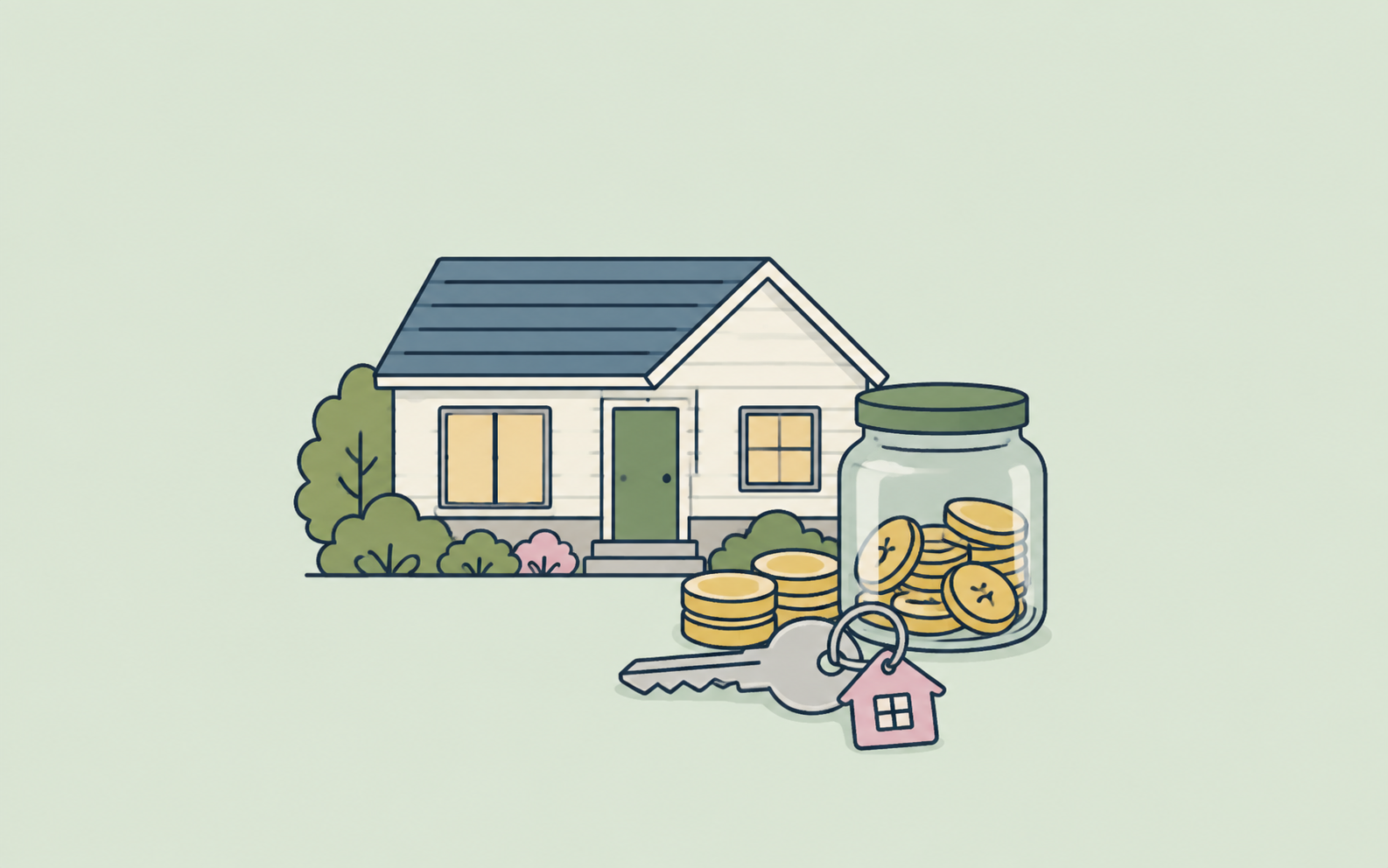
Many New Zealand buyers aim for a deposit of 20 percent of the purchase price. That would be $120,000 on a $600,000 home.
A smaller deposit may be possible. Some banks can provide owner occupier lending above 80 percent of the property's value, and eligible buyers may be able to use a First Home Loan with a 5 percent deposit. Approval is never automatic. Income, existing debt, expenses, credit history and the property all matter.
Deposit examples
Here is what common deposit percentages look like:
- On a $500,000 home, 5 percent is $25,000, 10 percent is $50,000 and 20 percent is $100,000.
- On a $700,000 home, 5 percent is $35,000, 10 percent is $70,000 and 20 percent is $140,000.
- On a $900,000 home, 5 percent is $45,000, 10 percent is $90,000 and 20 percent is $180,000.
The deposit is only one part of buying. You also need money for checks, legal work, moving and an emergency buffer.
Why people talk about a 20 percent deposit
A loan above 80 percent of the value of an owner occupied home is treated as high loan to value ratio lending under current Reserve Bank settings.
From December 2025, banks may have up to 25 percent of new owner occupier lending above that level. This restriction applies to each bank's overall new lending. It does not mean every buyer with less than 20 percent must be approved.
Banks also apply their own lending and affordability criteria. Read the current Reserve Bank loan to value ratio rules.
A larger deposit may give you more lender options, lower interest costs and a smaller risk that a fall in the property's value leaves you owing more than it is worth.
Can you buy with a 10 percent deposit?
Possibly. Banks can make some owner occupier loans above 80 percent of the property's value. They decide which applications fit their criteria and their available high loan to value lending capacity.
A low deposit borrower may face stricter affordability checks, different rates or a low equity margin. Terms vary by lender and can change. Ask for the full cost, not only whether the application is possible.
Can you buy with a 5 percent deposit?
Eligible buyers may be able to use a Kāinga Ora First Home Loan through a participating lender. Kāinga Ora says the programme can reduce the required deposit to 5 percent, while eligibility and lender criteria still apply.
Check the current income, property, deposit and borrower requirements on the official First Home Loan page.
Do not assume that having 5 percent guarantees approval. The lender still needs to be satisfied that you can afford the loan.
What if you are buying an investment property?
Investment property lending is treated differently from lending for a home you will live in. Under current Reserve Bank settings, an investor loan above 70 percent of the property value is high loan to value lending. This makes a 30 percent deposit a common starting benchmark. Banks can make a limited amount of investor lending above that level, but it is not guaranteed and each lender applies its own criteria.
The First Home Loan requires you to buy a home that will be your primary residence. A KiwiSaver first home withdrawal is also intended for a home you will live in, so do not include either option in an investment property deposit plan unless the relevant provider confirms that you qualify.
Investor lending also has separate debt to income settings. The Reserve Bank currently treats investor borrowing above seven times gross yearly income, after existing debt is taken into account, as high debt to income lending. A lender or mortgage adviser can explain how the current rules apply to your position.
Your income and debt can limit you before the deposit does
Saving a deposit is not the same as being able to borrow the rest.
The Reserve Bank also limits a bank's share of high debt to income lending. For owner occupiers, borrowing above six times gross yearly income, after subtracting existing debt, is currently classed as high debt to income lending. Banks can make a limited share of loans above that threshold and still apply their own affordability assessments.
Read the Reserve Bank explanation of debt to income restrictions.
For example, a couple may have a 20 percent deposit but still be unable to borrow the remaining amount because their income cannot safely support the repayments. Credit cards, personal loans and other debt can also reduce borrowing capacity.
Can KiwiSaver help with the deposit?
You may be eligible to withdraw most of your KiwiSaver savings to buy your first home after at least three years of membership. You must leave $1,000 in the account, and other conditions apply.
Talk to your provider early. The money does not simply move into your normal bank account, and the application needs to fit the purchase timeline. Inland Revenue explains KiwiSaver first home withdrawals.
KiwiSaver can contribute to the purchase, but it should not be mistaken for accessible emergency cash before the withdrawal is approved.
Costs people forget to save for
If every dollar goes into the deposit, the first unexpected bill can become new debt.
Allow for costs such as:
- A lawyer or conveyancer.
- A building inspection.
- A property valuation if the lender requires one.
- A LIM report or other property checks.
- Moving costs and immediate repairs.
- Rates, insurance and utility setup.
- A cash buffer after settlement.
The amounts depend on the property and professionals you choose. Get quotes rather than relying on a generic allowance.
Turn a house price into a savings plan
Suppose Ella and Sam are considering homes around $700,000. They want a 15 percent deposit, which is $105,000. They already have $48,000 available between cash and an estimated eligible KiwiSaver withdrawal.
Their remaining deposit gap is $57,000.
If they want to reach it in three years, the simple calculation is $57,000 divided by 36 months, or about $1,583 a month. They then add a separate target for buying costs and their post settlement buffer.
That result is useful even if $1,583 is too high. They can test a longer timeframe, a lower purchase price, a different deposit percentage or ways to increase income. The calculation turns a vague goal into choices.
How Fireball can help you prepare
Fireball can bring your bank accounts, KiwiSaver, investments, spending and debts into one view.
You can use it to:
- Create a Save up goal with a target amount and date.
- Track the balance assigned to the goal without counting transfers between your own accounts as new saving.
- See how much income genuinely remains after categorised spending.
- Identify recurring costs and changes that affect how much you can save.
- Keep the deposit, buying costs and emergency fund as separate jobs.
- Add the property and mortgage after purchase so home equity and debt remain visible.
Fireball does not decide what a bank will lend. It helps you understand the financial picture you bring to that conversation.
Common problems while saving a deposit
My deposit keeps going backwards
Check whether the same account is also paying for holidays, annual bills or emergencies. Separate those purposes in your plan. A transfer into savings is not permanent progress if the money regularly comes back out for ordinary spending.
House prices changed before I reached the target
Update the example purchase price and deposit percentage. Keep the target as a range if you have not chosen a property. Review it regularly without changing direction after every listing you see.
I have enough deposit but the bank says no
Ask which part of the application is limiting approval. It may be affordability, existing debt, income evidence, the property or lending policy. A mortgage adviser or lender can explain their current criteria. Do not assume the only solution is a larger deposit.
Should I use every dollar of KiwiSaver?
An eligible withdrawal can reduce the mortgage, but it also reduces retirement savings. Consider the purchase, your remaining cash and your longer term retirement plan together. Personalised financial advice may help with a large decision.
Common questions
What is the minimum house deposit in New Zealand?
There is no single minimum for every buyer and lender. A 20 percent deposit is common. Some standard bank loans may allow less, and eligible First Home Loan applicants may use a 5 percent deposit.
How long does it take to save a deposit?
Subtract what you already have from the target, then divide the gap by the amount you can genuinely save each month. Remember to include buying costs and a cash buffer.
Is a deposit all I need before making an offer?
No. You also need lending approval that fits the property and should arrange appropriate legal and property checks. Seek professional advice before signing an agreement you do not fully understand.
Save for the purchase, not just the headline deposit
A deposit target is useful, but a ready buyer also understands borrowing capacity, purchase costs and the cash needed after settlement.
Choose a realistic price range. Test more than one deposit level. Then build a plan that leaves you able to own the home, not merely buy it.
Make the next money decision calmer
Turn what you just read into a plan you can track, adjust, and actually live with. Explore our free financial calculators or see how Fireball brings your finances together.