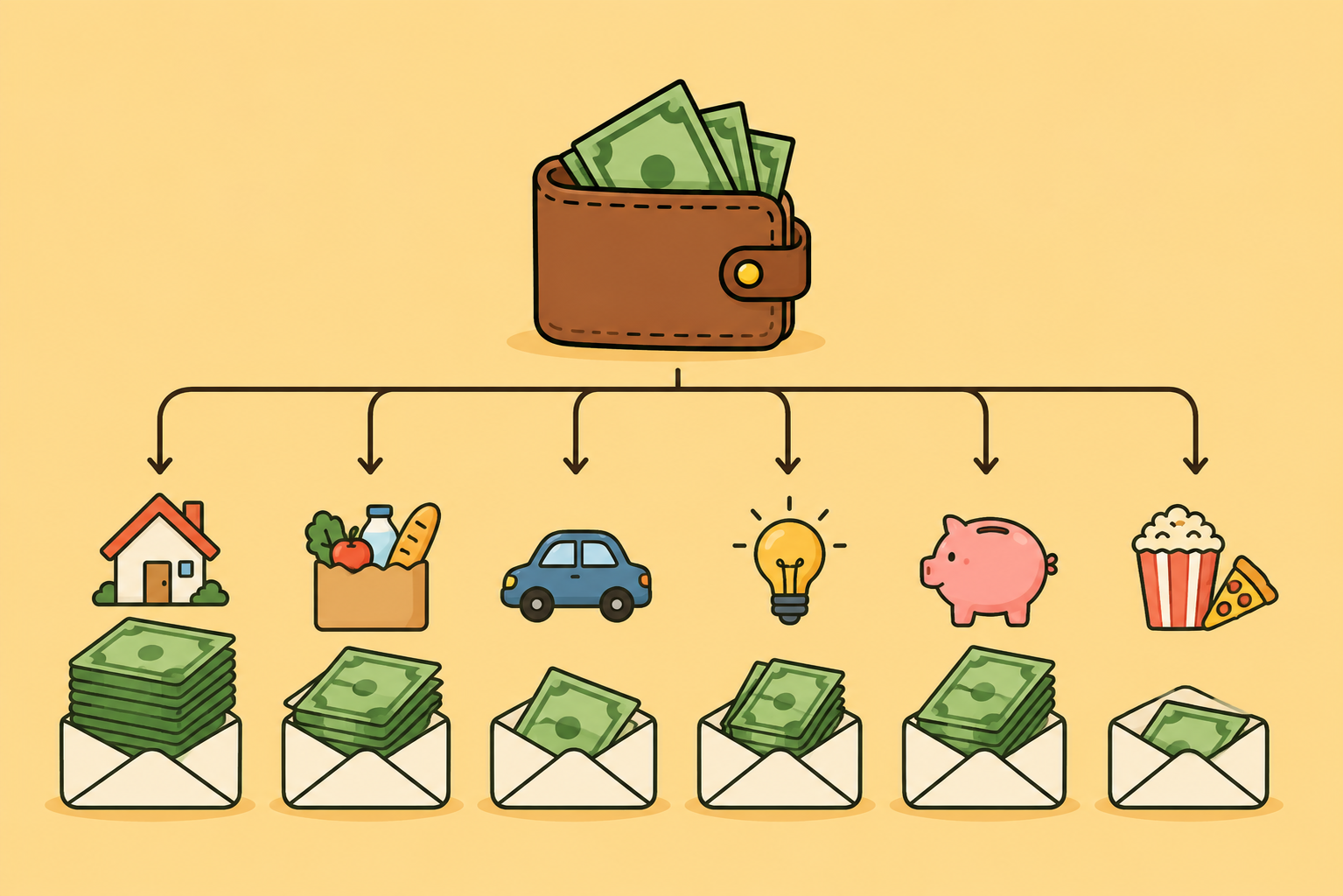
How to budget as a couple in New Zealand
Choose joint, separate or hybrid accounts, split shared costs fairly, set shared goals and build a couples budget that both partners can maintain.
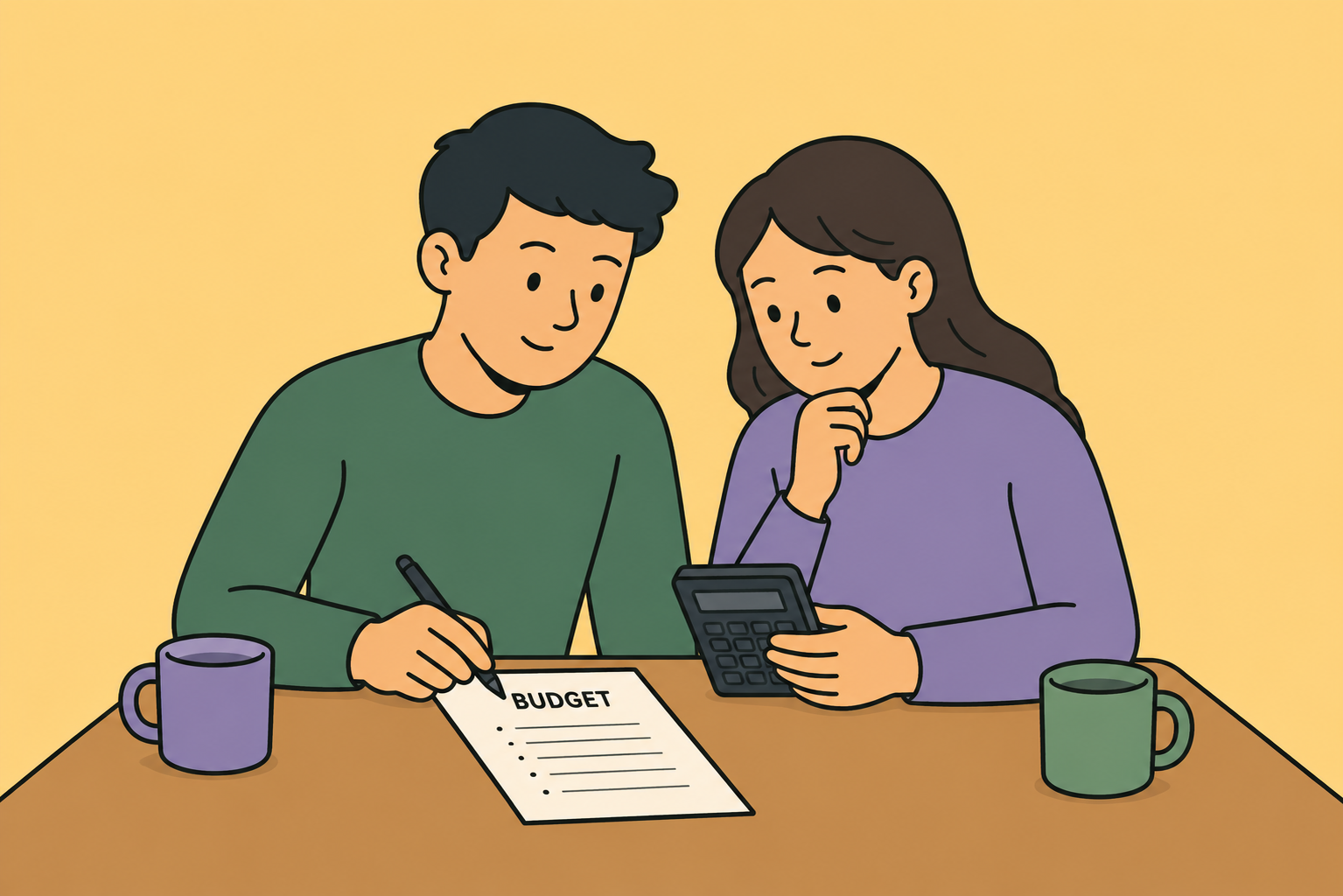
A couples budget is an agreed system for shared costs, personal spending and joint goals. It can use joint accounts, separate accounts or a hybrid of both. The best structure is the one both partners understand, consider fair and can maintain.
Most couples figure out money through a combination of habit, assumption, and occasional friction rather than any deliberate decision. One person pays the rent, the other does the groceries, and over time a system emerges that mostly works but nobody quite designed. That's fine until something changes. Incomes shift, a mortgage enters the picture, one person wants to save aggressively and the other doesn't, and suddenly the informal arrangement doesn't hold.
Building a deliberate structure means fewer things get decided by accident.
Money friction is common. In Fidelity’s US-based 2024 Couples and Money Study, 45% of partners said they argued about money at least occasionally and more than one in four identified money as their greatest relationship challenge. The figures are not New Zealand-specific, but they reinforce a practical point: regular, calm communication matters.
Quick guide
- Start by getting on the same page
- Joint, separate, or somewhere in between
- Equal or proportional: what feels right
- Building a budget you'll both actually use
- What are you building toward?
- Debt, income gaps, and the things nobody mentions
- Keep the conversation going
1. Start by getting on the same page
The conversation most couples avoid
Most people find money conversations with a partner at least a little uncomfortable. You might worry about what you'll find out, or how the other person will react to what you share. That discomfort is normal, and it's exactly why most couples keep putting the conversation off until something forces it.
The good news is that it gets easier the earlier you have it. Before opening a joint account or building a spreadsheet, it helps to understand how each person actually thinks about money — not just the numbers, but the instincts. Two people can have genuinely different relationships with spending and saving, and both be reasonable. Problems tend to come from those differences being unspoken rather than unresolvable.
A few things worth covering: what each person's financial situation looks like right now, including any debts or commitments the other might not know about; what each person's instinct is around spending and saving; what goals each person has individually and what they'd want to work toward together; and whether there are any purchases or decisions one person would want to run by the other before making.
You don't need to cover all of this in one sitting. Having it out in the open early tends to prevent friction later.
2. Joint, separate, or somewhere in between
Choose your account structure
Most couples land somewhere in one of three setups depending on their incomes, habits, and how much financial autonomy each person wants.
Fully joint means all income goes into shared accounts and all spending comes out of them. Everything is visible to both people and financial decisions are inherently shared. This works well when incomes are similar and spending habits are compatible. It gets harder when one person earns significantly more, or when one person's discretionary spending regularly causes friction.
Fully separate means each person keeps their own accounts and splits shared expenses by some agreed formula. It preserves individual autonomy and avoids some common sources of conflict. The coordination overhead is higher, and it doesn't scale well when incomes diverge.
Hybrid is where most couples end up: a shared account for shared expenses like rent, mortgage, groceries, and bills, with separate accounts for personal spending. Each person contributes to the shared account, either equally or proportionally, and what's left in their personal account is theirs without discussion. This tends to reduce day-to-day friction while preserving some autonomy.
The structure can change over time. Some couples start separate and move toward joint as the relationship progresses. It's worth revisiting when circumstances change rather than assuming the original setup still fits.
3. Equal or proportional: what feels right
Decide how to split shared expenses
If you go the hybrid route, the main decision is how to divide shared costs.
An equal split means each person contributes the same dollar amount. Simple to calculate, and it feels fair when incomes are roughly similar. When there's a meaningful income gap, the lower earner ends up contributing a higher proportion of their income, which affects how much discretionary money each person has left. That can start to feel unfair quietly, before either person has named it.
A proportional split means each person contributes the same percentage of income. Someone earning $80,000 and someone earning $50,000 would each put in, say, 40% of take-home pay. The dollar amounts differ but the sacrifice is equal. This tends to feel more equitable when incomes diverge, and adjusts naturally if either income changes.
4. Building a budget you'll both actually use
Set a shared budget
The shared budget should cover everything both people benefit from. Rent or mortgage, utilities, groceries, home insurance, internet, subscriptions you both use, and contributions toward shared savings goals.
Individual clothing, personal hobbies, separate social spending, and personal subscriptions come out of individual accounts. The test is whether both people genuinely benefit from the expense.
The edge cases are worth naming explicitly rather than leaving to assumption. A dinner you go to together, a holiday one person wants more than the other, a purchase one person initiated. These tend to cause the most friction when left unspoken.
Once your bills and savings are covered, Fireball works out what is left for flexible spending. Instead of debating every coffee or dinner out, you can sit down together and see what the household can comfortably afford. Fireball brings the accounts included by the account owner, budgets and goals into one plan, even if one person is currently responsible for updating it.
5. What are you building toward?
Set shared goals
Budgeting together is much easier when there's something both people are genuinely excited about working toward. A first home, a trip overseas, paying off the car, building a buffer so work feels less stressful. Shared goals give the budget a reason that goes beyond splitting bills.
It helps to agree on the timeline and what each person is contributing. Having different ideas about how aggressively to save is common. The friction usually comes from those ideas not being named.
6. Debt, income gaps, and the things nobody mentions
Handle the harder stuff
Income gaps. A significant income difference needs more than a proportional split formula. If one person earns considerably more, there are real questions beyond who pays what percentage. Does the higher earner fund more of the shared savings goals? What happens when one person has significantly more spending money than the other? That dynamic can quietly affect how people feel about the relationship, not just the finances. Some couples are comfortable with the asymmetry. Others find it creates resentment over time. Either way, it's worth naming directly.
Existing debt. Personal debt may remain one person's responsibility, while debt taken on jointly or for the household can be relationship debt under New Zealand law. Either type can affect a shared budget and a joint mortgage application. Be open about what each person owes, what the repayments cost and whether the debt belongs in the household plan. Get legal advice if you are unsure how a particular debt would be treated.
Relationship property. Keeping accounts separate does not necessarily keep everything legally separate. In New Zealand, relationship property is usually divided equally when a relationship ends, but the result depends on the relationship, how long it lasted, what is relationship property, what is separate property and whether there is a valid contracting out agreement. If either person has a home, KiwiSaver, a business, significant assets or substantial debt, consider getting independent legal advice early.
7. Keep the conversation going
Schedule regular money dates
A budget that gets set up once and never revisited tends to drift. A regular money date, a scheduled low-key check-in, keeps things current and surfaces friction before it builds up.
The name matters. Calling it a money date rather than a budget review changes the tone. It works best when it's not triggered by a problem. Couples who only talk about money when something goes wrong tend to associate the conversation with conflict.
You don’t need to turn it into a full financial summit. Twenty minutes is usually enough to look back at what you spent, talk about what’s coming up and check that the arrangement still feels fair. Even if one person keeps the budget up to date, both people should be able to see the numbers and have a say in what changes.
Monthly works for most couples. Some do it quarterly once things feel settled. A money date that actually happens every three months is more useful than a monthly one that keeps getting postponed.
Use Fireball for your money check in
If you are looking for a couples budgeting app in New Zealand, it should make the shared picture easier to understand without turning every personal purchase into an argument. A money conversation is easier when both people are looking at the same numbers instead of relying on different estimates.
Decide together which accounts, debts, bills, and goals belong in the household plan. Only connect or add accounts you are authorised to use. It is fine to leave personal spending outside the shared conversation if that is the system you have agreed on.
During a regular check in, Fireball can help you answer a few useful questions:
- Did household spending stay within the budget you agreed on?
- Are any recurring bills or income details different from what you expected?
- Did your shared Save up goals move forward?
- Is the Pay down plan still based on repayments you can afford?
- Has a change in spending, saving, property, or debt affected your FIRE plan?
You do not need to inspect every coffee or ask one person to justify each purchase. Start with the shared totals and the goals you agreed on. If something has changed, discuss the decision you want to make next rather than using the app as a scorecard for each other.
Even if one person maintains the plan, both partners should understand what is included and have a say in the targets. Fireball supplies the numbers. The agreement about what feels fair still belongs to the two of you.
Fireball Collaborators is a feature that will let an account owner invite a partner using their own Fireball login. A Viewer will be able to see the shared financial picture without changing it. An Editor will also be able to update budgets, categories, transactions, recurring activity and goals. Bank connections, imports, billing, security settings and AI will remain under the account owner's control. In this way, both people could manage and track the budgets and goals.
Viewer and Editor access will show the same shared financial information. It will not let the owner hide selected accounts from a collaborator, so only invite someone you trust and are comfortable sharing the full picture with.
One person should maintain the Fireball plan and use it together during regular money check ins. Do not share your Fireball login.
Make the next money decision calmer
Turn what you just read into a plan you can track, adjust, and actually live with. Explore our free financial calculators or see how Fireball brings your finances together.