Should you pay off your mortgage or invest in New Zealand?
Compare extra mortgage repayments with investing, understand the real tradeoffs, and choose an approach that fits your risk, timeframe and goals.
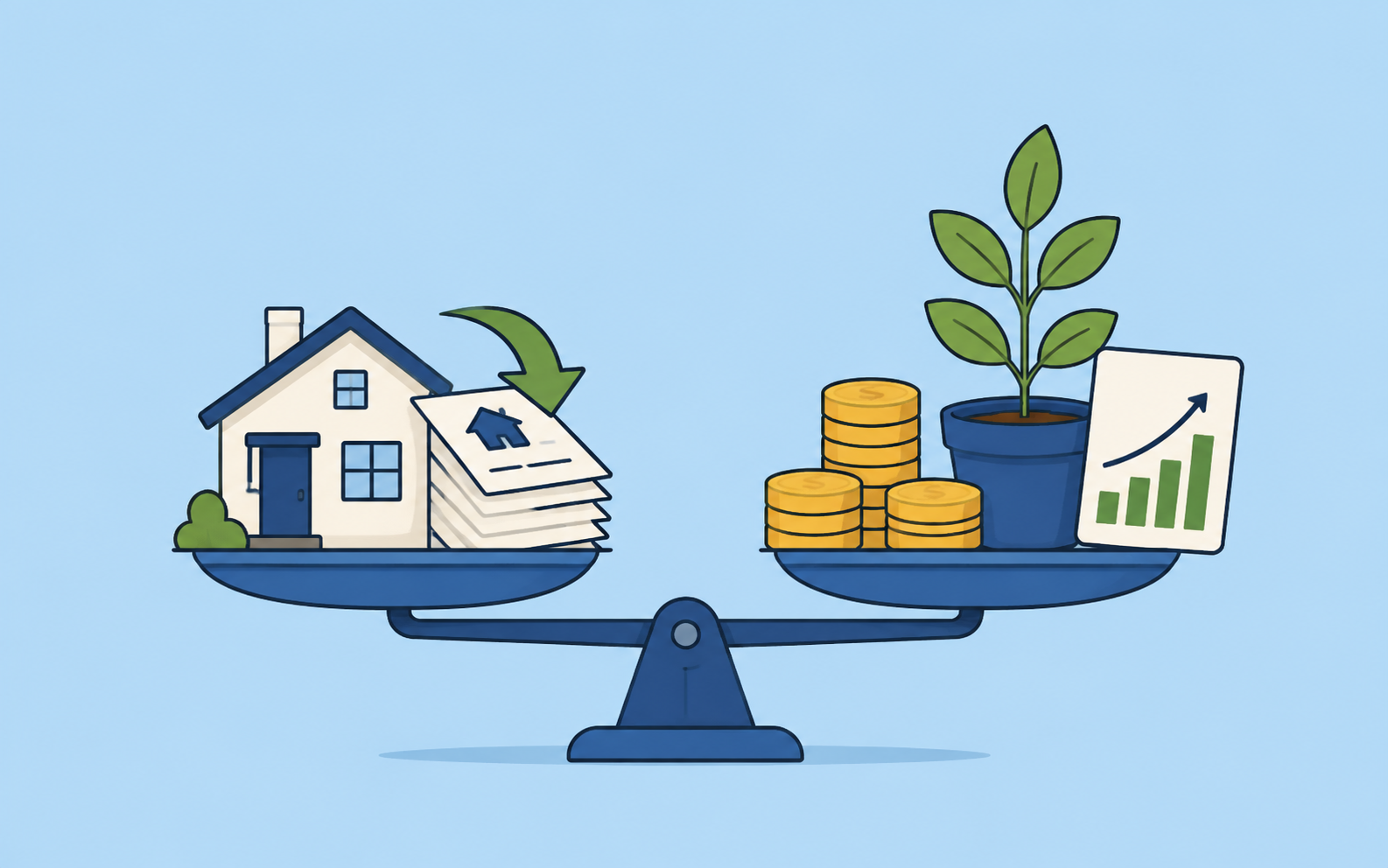
There is no universal winner. Paying extra off your mortgage gives you a predictable saving on interest. Investing offers the possibility of higher long term returns, but those returns are uncertain and the value can fall.
For many New Zealand homeowners, the sensible answer is a combination. Keep a cash buffer, meet required payments, capture any KiwiSaver benefits for which you are eligible, then divide extra money according to your goals and comfort with risk.
The decision in plain language
An extra mortgage payment reduces a known debt. If your mortgage rate is 6 percent, every extra dollar stops that part of the loan attracting roughly 6 percent yearly interest while that rate applies.
An investment might earn more than 6 percent over a long period. It might also earn less, fall sharply for a time or lose money. Fees and tax reduce the return you keep.
The Financial Markets Authority explains that an extra payment on a 3 percent mortgage improves your wealth by about as much as an investment returning 3 percent after fees and tax, while avoiding investment risk. Read the FMA guide on what it means to be an investor.
That gives you a useful comparison:
- Mortgage benefit: the interest you avoid.
- Investment benefit: the return you keep after tax and fees.
- Main difference: the mortgage saving is predictable while the investment return is not.
Reasons to pay the mortgage faster
Extra repayments may suit you when:
- Being debt free is an important goal.
- Your mortgage rate is high.
- You are approaching retirement and want lower required expenses.
- Investment losses would make you panic or abandon the plan.
- You already have appropriate retirement contributions and a cash buffer.
- Your loan allows extra payments without a charge.
Reducing debt can also improve cash flow later. Once the mortgage is gone, the former payment can support investing, family needs or greater freedom at work.
Reasons to invest while you have a mortgage
Investing some extra money may suit you when:
- Your goal is many years away.
- You can accept market falls without needing to sell.
- You want wealth outside your home.
- You value access to investments before the mortgage ends, subject to the investment's own withdrawal rules.
- You are building a diversified portfolio rather than relying on one property.
- You are eligible for employer or government KiwiSaver contributions that you would otherwise miss.
Shares and share funds can offer higher returns over the long term, but the return is not guaranteed. The FMA notes that shares can be volatile and that money needed soon may have to be sold during a market fall. Its guide to shares explains the risks.
Do not skip the emergency fund
Putting every spare dollar into the mortgage can leave you asset rich but cash poor.
If the car breaks down or income stops, it may not be simple or cheap to take that money back out of the house. A revolving credit or offset structure can provide flexibility, but only if you understand the terms and do not repeatedly spend the balance.
Keep an accessible emergency buffer before committing all extra cash to either option. The amount depends on job stability, dependants, insurance and essential expenses.
Compare the numbers fairly
Suppose Priya has a mortgage rate of 6 percent and $500 a month available.
If she pays the $500 into the mortgage, she avoids interest at the loan rate while that rate applies. The exact benefit depends on the loan balance, remaining term, rate changes and any repayment limits.
If she invests the $500, she may earn more over 15 years, but the path will not be smooth. A quoted investment return must be reduced for fees and tax before it can be compared with the mortgage rate.
It would be misleading to compare a guaranteed mortgage saving with an optimistic investment average as though both were certain.
Check your loan before paying extra
Fixed home loans may limit extra repayments or charge an early repayment cost. Floating, offset and revolving credit loans work differently.
Ask your lender:
- How much can I repay without a charge?
- Will the extra amount reduce my loan term or my scheduled payment?
- Can I access the money again?
- What happens when the fixed period ends?
Use the lender's current terms. Do not assume another bank's rules apply to your loan.
A split strategy can remove the all or nothing pressure
You do not have to predict which option will win.
For example, Tane has $800 a month after normal expenses. He keeps $300 going to a diversified investment fund and puts $500 towards the mortgage. He reviews the split when the interest rate changes.
Another person may choose an even split. Someone close to retirement may direct more to debt. Someone with a long timeframe and a low loan to value ratio may direct more to investments.
The best split is the one you can explain and continue through changing markets and interest rates.
Where KiwiSaver fits
KiwiSaver is investing, but it has particular contribution benefits and withdrawal restrictions.
Before making extra mortgage payments, check whether reducing KiwiSaver contributions would cause you to miss an employer contribution or government contribution for which you are eligible. Rules and default rates can change, so check current KiwiSaver information with Inland Revenue.
KiwiSaver is generally not accessible until 65, apart from permitted early withdrawals. If you want financial independence earlier, you may also need investments outside KiwiSaver.
How Fireball can help you compare the paths
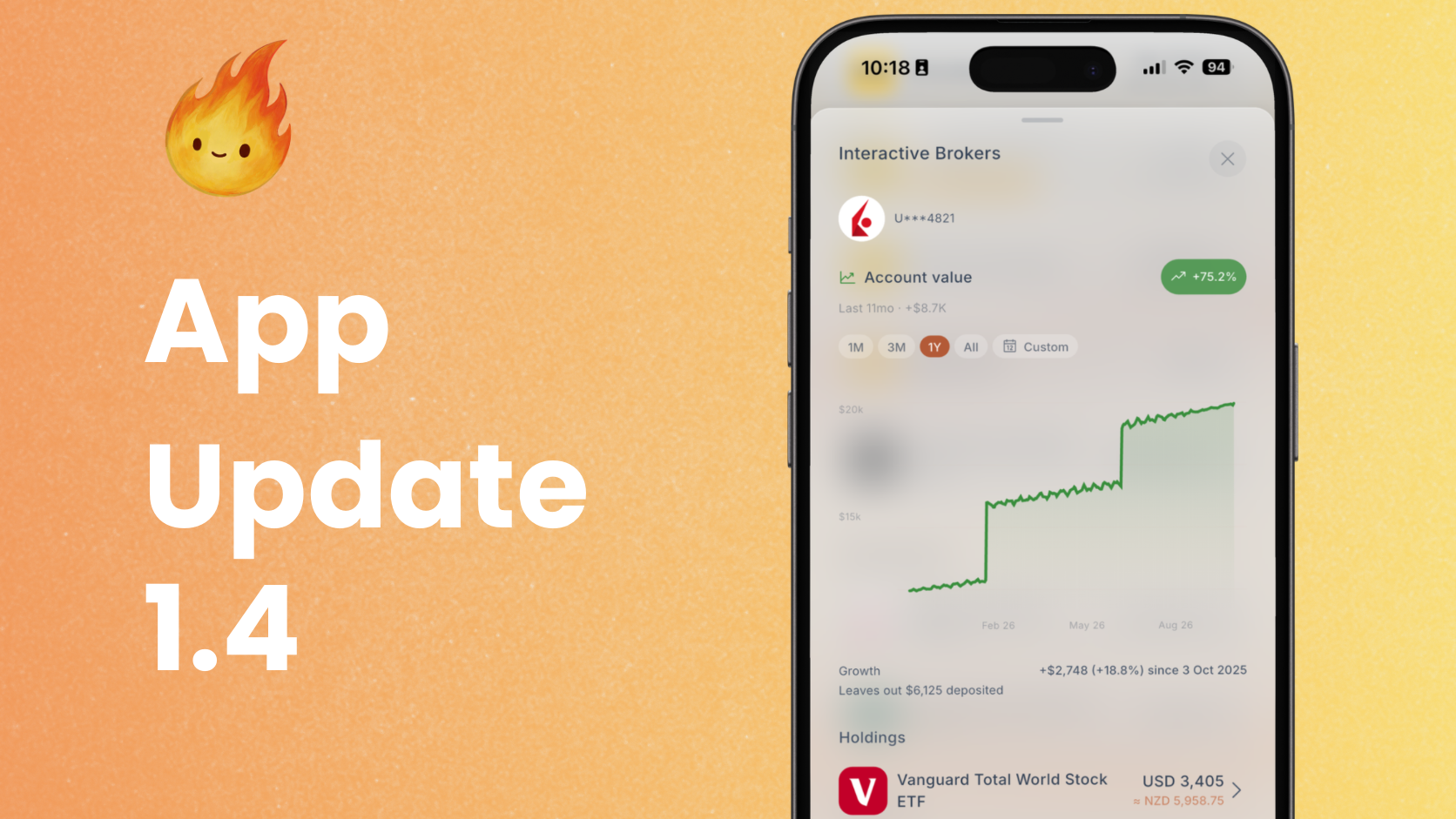
Fireball links your property and mortgage so the loan balance, estimated home equity, cash flow and net worth can be viewed together.
You can use Fireball to:
- Track the mortgage balance and debt free timeline.
- Model how extra repayments may change the payoff date.
- Keep home equity separate from investable wealth.
- View investments and KiwiSaver alongside the mortgage.
- Test how a different debt or contribution approach could affect your FIRE projection.
The projection cannot tell you which risk is emotionally right for you. It can make the tradeoff visible.
Common situations
My mortgage rate is higher than my expected investment return
Extra mortgage payments become more attractive mathematically, especially because the interest saving does not depend on market performance. Check tax, fees and any loan repayment charges before comparing.
I may need the money within five years
Be cautious about relying on volatile investments for a near term need. Paying the mortgage also reduces access unless your loan structure lets you withdraw the money. A cash reserve may be more suitable for money you expect to use soon.
Market falls make me nervous
Choosing a strategy you can maintain matters. A theoretically higher return is not helpful if a fall causes you to sell at a loss. Learn about risk and diversification before investing. The FMA has a beginner guide to risk, return and cost.
I want to retire early
Consider both sides. A smaller mortgage reduces the spending your future portfolio must support. Investments outside KiwiSaver can provide accessible money before 65. Your plan may need both.
Common questions
Is paying off a mortgage an investment?
It is not an investment account, but it improves your net worth by reducing debt and avoids future interest. The economic benefit can be compared with an after tax, after fee investment return.
Is it better to invest a lump sum or pay down the mortgage?
It depends on the mortgage rate, loan terms, investment timeframe, tax, fees, risk and your need for accessible cash. A large decision may justify personalised advice from a licensed financial adviser.
Should I clear the mortgage before retirement?
Many people aim to because it can reduce required retirement spending. It is not a legal requirement, and the right plan depends on your assets, income and housing goals.
Choose deliberately, then review
Mortgage repayment offers certainty. Investing offers uncertain growth and diversification beyond your home. Neither choice is automatically responsible or irresponsible.
Protect your short term cash needs first. Compare the returns fairly. Choose a split that matches your timeframe and risk, then review it when rates or your life change.
Make the next money decision calmer
Turn what you just read into a plan you can track, adjust, and actually live with. Explore our free financial calculators or see how Fireball brings your finances together.