How to budget on a low income in New Zealand when money is tight
A realistic New Zealand guide to using Fireball to plan around a smaller income, protect essential costs and see problems before payday.

If most of your income disappears into rent, groceries, power and transport, being told to budget harder can feel insulting.
A budget cannot make an income sufficient when it is not. It cannot reduce rent that is already high or prevent an urgent dental bill. What it can do is show you what needs attention first, help you prepare for known costs and make it easier to ask for help before a missed payment becomes a larger problem. No savings is too small, anything is better than nothing.
You do not need to save 20 percent of your income to be good with money. When money is tight, a successful budget may simply help you keep the power on, avoid a fee and reach the next payday with fewer surprises.
Start with the money you actually receive
Use your take home pay, benefit payments, Working for Families payments and other dependable income. Do not begin with your salary before tax or with income that might arrive.
If the amount changes, look at what usually reaches your accounts and choose a cautious figure. Our guide to budgeting when your income changes every month explains this in more detail. For now, ask one question:
How much money can I confidently plan with before the next payday?
Imagine Mere receives $760 each week after tax. Some weeks she can pick up an extra shift, but the additional pay is not guaranteed. Her basic plan should begin with $760. When extra income arrives, she can decide where it will help most.
This keeps an uncertain payment from being promised to two different expenses.
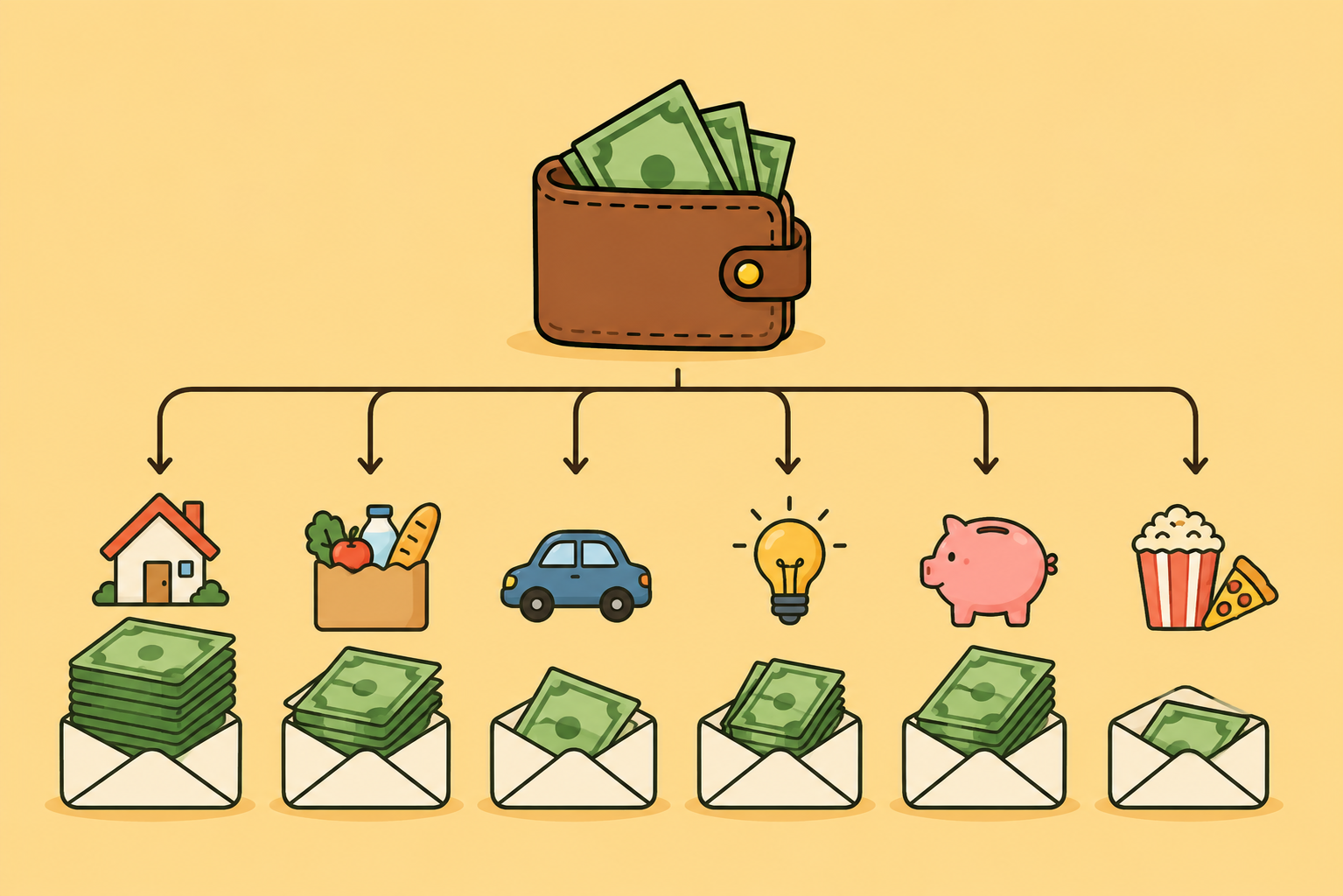
Protect the essentials first
When there is not enough for every category, do not divide the money using a generic percentage rule. A rule such as 50 percent for needs, 30 percent for wants and 20 percent for savings may be useful for some households, but it does not fit everyone. Sorted also notes that these common percentages may not work when essential costs take a larger share of income.
Start with the costs that protect your immediate health, housing and ability to earn income:
- Rent, mortgage or board
- Basic food
- Power and essential utilities
- Essential medication and health costs
- Transport needed for work, study or caring responsibilities
- Minimum required debt payments
- Other essential commitments for your household
The exact order depends on your circumstances. If you are unsure which payment is most urgent, a financial mentor can help you work through the consequences. Budgeting method such as flex budgets could be useful. As fixed spendings would be composed of essential expenses.
After the essentials, add costs that are important but may have more flexibility. These could include a mobile plan, insurance, school costs and household supplies. This would be occasional spendings in flex budgeting. Then list optional spending.
This is not about labelling every enjoyable purchase as irresponsible. It is about knowing which expenses can move when this particular week does not stretch far enough. This would be the flexible spendings in flex budgeting.
Build a payday plan in Fireball
A monthly budget can look affordable while your account still runs low before payday. Fireball helps you compare the timing of recognised income, recurring payments and your estimated account balance.
Before each payday:
- Check the income Fireball expects to arrive.
- Review the recurring payments due before the following payday.
- Allow for groceries, transport and other essential spending in your budget.
- Consider any unusual cost that Fireball may not know about yet.
- Check whether the estimated balance approaches your chosen safety amount.
For example, Fireball shows that Mere normally receives $760 on Wednesday. Her recurring rent and power payments are already visible, while her budget allows for groceries and transport. The remaining amount appears to be $85.
Mere also knows that a $60 prescription is due, but it is not part of her usual recurring activity. She treats that money as already committed, leaving $25 of breathing room.
Fireball has done most of the organising. Mere only needs to review what it recognised and add the context it could not know.
Make irregular costs visible
Some expenses do not happen every week or every month. Car servicing, school costs, dental care, annual subscriptions, insurance renewals and family events can easily be forgotten until they arrive.
Fireball uses your transaction history to help surface recurring activity and spending patterns. Review what it finds and check whether any larger or less frequent costs are approaching.
Fireball may not recognise a new expense or something that happens unpredictably, such as replacing an appliance. Add that knowledge when setting your budget so the amount in your account is not mistaken for money that is safe to spend.
If there is money left after essential costs, put a small amount towards the next irregular expense you know is coming. For example, saving $5 a week for a car registration due in ten weeks gives you $50 towards the bill. You may not cover the full cost yet, but you will have less to find when it arrives.
When there is nothing left to save
If income covers the essentials but leaves nothing over, your first goal does not need to be investing or building a large emergency fund.
Try to create a small gap in this order:
- Check that you receive all income and assistance for which you may qualify.
- Look for a bill that can be reduced, renegotiated or moved to a better date.
- Prevent avoidable fees and interest where possible.
- Build a very small buffer, even if it starts with the cost of one bus trip or one prescription.
- Increase the buffer gradually when an extra payment, refund or lower cost creates room.
Do not move money into savings merely to move it back before payday and then judge yourself for failing. Measure what stayed saved over time. If $40 went into savings but $30 came back out for groceries, your net saving was $10. That is the number that helps you plan honestly.
Some weeks the correct saving amount will be zero. Protecting food, housing and health comes first.
Check what support may be available
Do not assume that having a job means you cannot receive help. Work and Income says support may be available for living expenses and urgent costs even when you are working. Eligibility depends on factors including household income, assets and expenses.
Use Work and Income's Check What You Might Get tool to explore possible assistance. Its guidance covers support that may help with costs such as accommodation, childcare, health care, transport, food and power. The tool is only a guide, and Work and Income confirms eligibility when you apply.
If you care for dependent children, check Working for Families information from Inland Revenue. Payments depend on your family circumstances and income. If you receive payments during the year, keep your income estimate and family information current because changes can affect the final entitlement.
Support and thresholds change. Use current official information rather than relying on an old article or someone else's eligibility.
What to do when expenses are higher than income
If the essential total is greater than the income available, the budget is not broken. It has identified a real shortfall.
Do not make the numbers balance by entering income you do not have or removing an essential cost. Instead:
- Work out the amount and timing of the shortfall.
- Check official support and any workplace entitlements.
- Contact providers before a payment is missed and ask what options are available.
- Avoid taking new high cost debt for ordinary expenses without understanding the full repayment cost.
- Speak with a financial mentor while there are still choices available.
Seeking help is not an admission that you handled money badly. Sometimes the income simply does not cover the cost of living.
How Fireball can help when every dollar matters
When money is tight, the most useful view is not a complicated spreadsheet. It is a clear answer to three questions:
- What came in?
- What must still go out?
- How much room is left before the next payday?
Fireball brings connected transactions, recognised income, recurring bills and budgets into one financial picture.
Start with Single Budget if categories feel overwhelming. It gives you one overall spending limit, so you can first see whether total spending fits the amount available. A budget is a guide, not a judgement. Set a limit that reflects your real income rather than a number you think you should be able to live on.
Fireball can look for repeating income and charges in your transaction history. Review each suggestion before relying on it. Once the details are confirmed, recurring activity helps you see which bills and income are expected and when they may arrive.
Use Cash Flow in Insights to compare recognised income with categorised spending for the selected month. Categories and merchants can then show where most of the money went. This can help you find a genuine opportunity to adjust, but it can also confirm that essential costs already use most of the income.
Eligible connected accounts can show estimated balances between 3 and 30 days ahead. A Projected low balance alert can warn you when a selected account may fall below the safety amount you chose. This is an early warning based on the activity Fireball knows about, not a guaranteed future balance. Unexpected purchases, late income and missing recurring details can change the result.
For Mere, that means Fireball could show her pay and regular power payment alongside the account forecast. If the forecast approaches her chosen safety amount before the next payday, she can review the dates and decide whether to move a flexible purchase, contact a provider or check that expected income has been recorded correctly.
Fireball cannot increase income or decide which essential matters most to your family. It can make the timing and tradeoffs easier to see, so the next decision is based on your actual money rather than a guess.
A ten minute weekly routine
Shortly before or after payday:
- Review any income or recurring activity that needs confirmation.
- Check the payments Fireball expects before your next payday.
- Look at the account forecast and Projected low balance warning.
- Open Cash Flow if you need to understand where the money went.
- Correct any transaction, category or recurring payment that looks wrong.
- Act early if Fireball shows that your balance may become tight.
You do not need to examine and justify every purchase. Fireball has already organised the activity. Focus on anything new, incorrect or likely to create a shortfall.
Common questions
How do I budget when I barely earn enough?
Start with the next pay period. Use the money that will actually arrive, protect essential costs first and make the timing of bills visible. If essentials exceed income, check available support and contact a financial mentor rather than forcing the budget to show a surplus that does not exist.
Can I save money on a low income?
Possibly, but the amount may be small or zero during difficult periods. Begin with a tiny buffer after essential costs are protected. Measure net saving, which is the amount that remains saved after any withdrawals, rather than only counting transfers into a savings account.
Does the 50 30 20 rule work on a low income?
Not always. If housing, food and transport already take more than half of your income, the percentages do not reflect your reality. Use them as a comparison, not a requirement. Build the budget around your actual essential costs.
What help can low income workers get in New Zealand?
It depends on income, household circumstances, assets and costs. Work and Income's Check What You Might Get tool is a useful starting point even if you are employed. Families with dependent children should also check current Working for Families information from Inland Revenue.
What if I cannot pay a bill?
Contact the provider as early as possible, explain the situation and ask what options are available. If several payments are competing or debt is growing, MoneyTalks can connect you with a free financial mentor who can help you prioritise.
A good budget tells the truth
Budgeting on a low income is not about finding endless things to cut. It is about protecting what matters, seeing pressure before it becomes a crisis and knowing when the answer needs to involve more income, lower essential costs or outside support.
Begin with the next payday. Make the essentials visible. Give irregular costs somewhere to live in the plan. If there is even a small amount left, use it deliberately. If there is not, let the budget show that honestly and get help early.
That is not failing at money. It is using the information to make the best next decision available.
Make the next money decision calmer
Turn what you just read into a plan you can track, adjust, and actually live with. Explore our free financial calculators or see how Fireball brings your finances together.