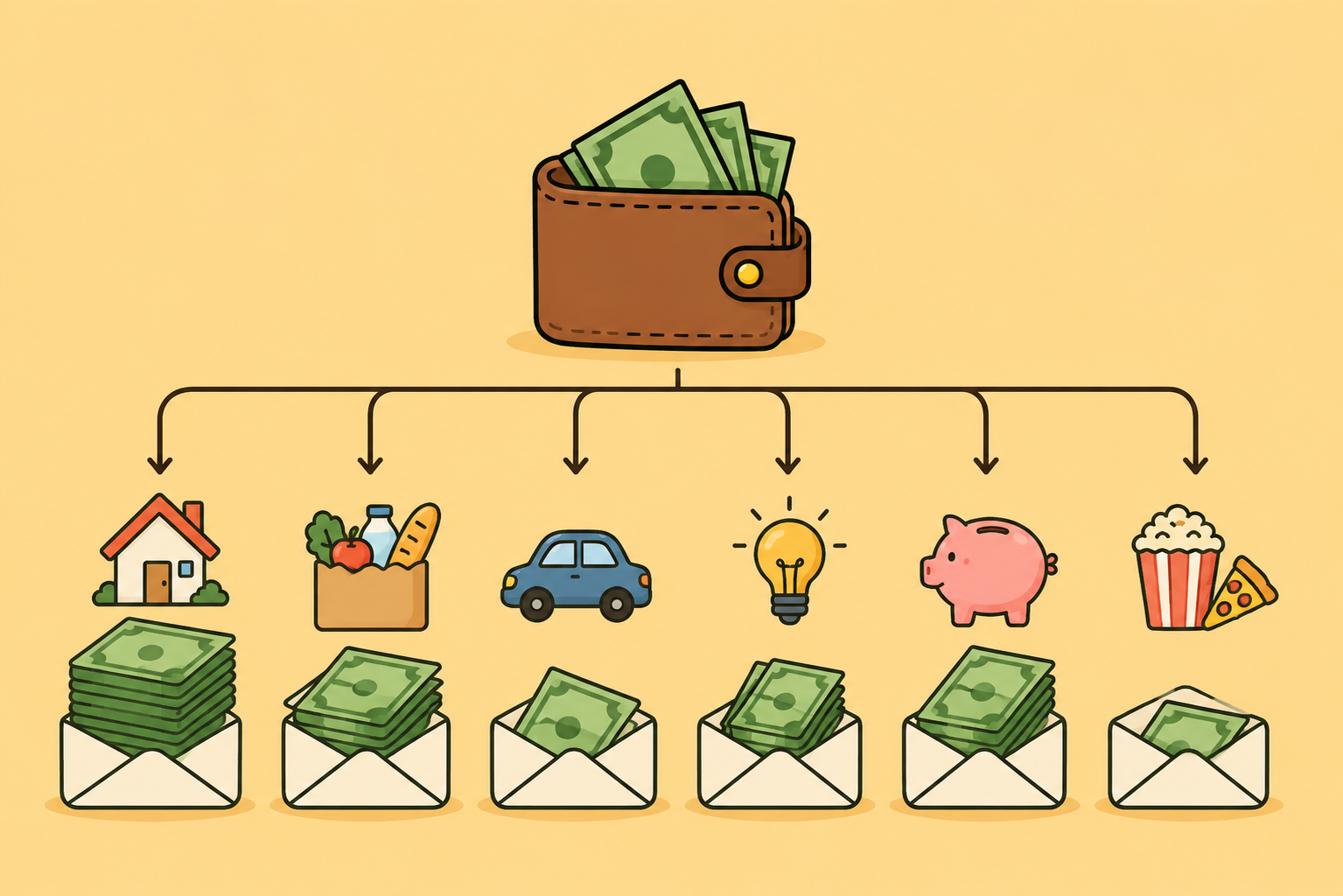
How to budget for Christmas and summer holidays without a January money squeeze
Plan gifts, travel and summer spending without forgetting January bills. Use your actual pay dates and Fireball to build a Christmas budget you can afford.

To budget for Christmas and summer, protect your ordinary bills first, add the extra costs you expect, and divide any remaining funding gap by the paydays before you need the money. Include January, not just Christmas Day. If the amount per payday is unaffordable, change the plan before booking or buying.
The presents might be under control. Then comes petrol for the family visit, food for the barbecue, a campground payment and a few days out with the kids.
By January, the holiday spending is over but the rent, mortgage and insurance have not taken a break.
The answer is not necessarily cancelling everything. It is deciding which parts matter most and making the full cost visible early.
Start with the money already committed
In Fireball, review your income, recurring payments and upcoming account forecast. Check the dates and amounts, especially if your working hours or payment timing will change over the break.
A forecast is an estimate based on the information included. It will not know about an unrecorded holiday purchase or a change your employer has not confirmed. Add those to your planning before treating a balance as available.
For the broader calculation, see how much money is safe to spend before payday. Here, the extra job is making room for the holiday season without using money needed afterwards.
Make one holiday total, not just a gift budget
Include the extra costs that actually apply to you:
- Presents, postage and wrapping.
- Hosting and food above your usual grocery spending.
- Travel, accommodation and extra transport.
- Activities and time away from home.
- Any income gap during unpaid time off.
- January commitments, including school costs where relevant.
Do not add all your normal groceries again if they are already in the ordinary budget. Add the extra holiday amount, or replace the normal amount for that period with the full amount you expect.
Work backwards from the date you need to pay
Here is an illustrative plan, not a recommended spending level.
| Extra cost | Planned amount |
|---|---|
| Gifts | $300 |
| Extra food and hosting | $150 |
| Extra travel costs | $250 |
| January school costs | $200 |
| Total | $900 |
If $300 is already available for these costs, the gap is $600. With six paydays before the money is needed, that is $100 each payday.
But check the deadlines separately. If accommodation requires payment next week, saving the right total by Christmas will not solve that earlier shortfall.
If you can spare only $50 a payday, six paydays add $300. Together with the existing $300, you have $600 available, not $900. Reduce, delay or replace $300 of the plan rather than assume future income will cover it.
Let last Christmas help you plan for this one
If your Fireball history includes last Christmas, review what you spent on gifts, hosting and travel. Use those amounts as a starting point, adjusting for anything different this year.
You can budget for those costs months ahead using budgets with Roll over unspent enabled. Each period’s unused allowance carries forward, so Christmas has a place in your budget throughout the year rather than becoming an extra December expense.
For a new plan, such as a summer trip, a Save up goal can help you work towards a specific target and track your progress.
For an expense applying to one selected period, use Plan expense. For example, you might include a specific gift purchase in that week's plan without creating a repeating weekly gift allowance. If the category already has a budget, enter the total needed for that period, not an amount to add on top.
Use a tag such as Summer 2026 to group related transactions across categories. Accommodation can keep its category while carrying the same tag as gifts and activities. The tag adds context; it does not create another spending allowance.
Avoid reserving the same money twice through both a goal and a budget. Budget allocations do not move money between your bank accounts, and a carried budget is an allowance, not a separate bank balance. Keep the money available for when you need it.
What if your pay arrives early before Christmas?
Ask which working period that pay covers and when the following payment will arrive. An early payment is not automatically extra income.
Keep enough for the longer gap if one exists. Review Fireball's expected pay dates against your employer's confirmed schedule rather than relying on the usual pattern.
What if you are starting late?
Start with what can be funded now. Agree on gift limits, simplify hosting or choose fewer paid activities before making commitments.
You do not have to recreate someone else's Christmas. A smaller plan you can enjoy is more useful than a larger one that leaves essential bills unpaid.
Before your next holiday purchase
Check three things: is it in the holiday plan, is the money available by the payment date, and are the bills after the holiday still covered?
Fireball helps you bring the spending, commitments and budget together. The aim is to enjoy the season knowing what you have chosen, rather than discover its total in January.
General educational information, not personal financial advice. Examples are illustrative. Source checked 3 November 2026.
Make the next money decision calmer
Turn what you just read into a plan you can track, adjust, and actually live with. Explore our free financial calculators or see how Fireball brings your finances together.