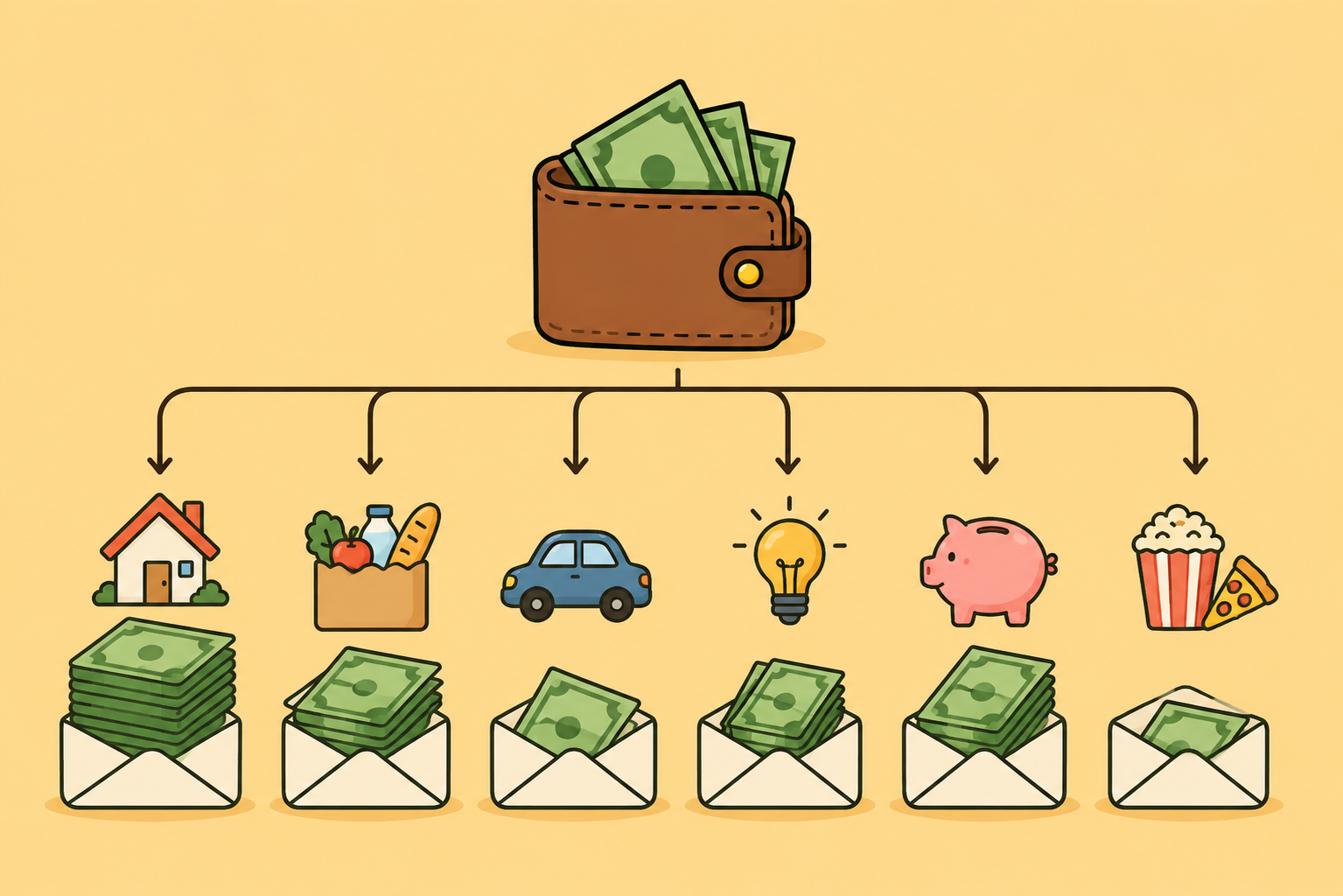
How to budget when you're paid fortnightly
Paid fortnightly but billed monthly? See upcoming bills against payday, spot cash flow gaps and use Fireball’s Safe to Spend to guide everyday spending.
To budget when you are paid fortnightly, look at which bills will arrive before your next payday, then decide what is available for everyday spending. Fireball helps by recognising recurring bills and income, showing expected payment dates, forecasting eligible account balances, and calculating Safe to Spend for your active budget.
Your pay arrives every 14 days. Your power company, insurer and phone provider usually follow the calendar month. Rent might be weekly, and several payments can land in the same few days. You can earn enough across a month and still be short on the day a bill comes out.
The useful question is: what needs to come out of this money before I am paid again? You should not have to rebuild a spreadsheet every fortnight to answer it.
Disclosure: Fireball publishes this guide and makes the budgeting app described here. This is general information, not personal financial advice.
Why do monthly bills cause problems with fortnightly pay?
Monthly bills stay near a calendar date while your paydays move through the month. A bill due on the 25th might fall near payday in one month and near the end of a pay period in another. Dividing the monthly total by two does not show that timing.
An affordable monthly total can also hide a difficult week. Rent, insurance and power may leave the account before the next salary arrives. A healthy balance today can include money that is already needed for those payments.
You need two views: what is due and when, plus how much remains in your spending plan. Fireball’s account forecast and Safe to Spend help you check both.
How does Fireball help when bills and payday do not line up?
Find the recurring bills and income
Fireball looks for repeating payments and income in connected or imported transactions. Rather than typing every regular bill into a fresh list, start with the recurring activity it recognises. Review suggestions once to check the amount, frequency and next date, then keep an eye on changes.
The saved schedules let a monthly bill stay monthly and your income stay fortnightly. They do not need to share a frequency to appear in the same upcoming view. Add a missing bill or income source when there is not enough transaction history to recognise it.
See the bills alongside the next payday
Use upcoming activity and the account forecast to see whether expected income arrives before or after the next bills. For eligible accounts, the forecast estimates how known income, bills and transfers may change the balance. Look for the lowest point before payday, not only the balance after your pay arrives.
This can reveal that a bill is affordable over the month but awkwardly timed. You can then review optional spending, arrange money in the account that will pay it, or ask the provider whether a different payment date is available.
Use Safe to Spend for the spending decision
Safe to Spend shows what remains in your active budget after spending and relevant upcoming commitments. When the budget runs fortnightly from payday, the remaining amount and daily figure follow that period. You can judge an optional purchase against that amount instead of treating the bank balance as available to spend.
The account forecast and Safe to Spend answer different questions. The forecast helps you spot a possible cash shortage on a particular date. Safe to Spend shows what is left in the budget. A positive budget remainder does not guarantee that the account paying tomorrow’s bill has enough money.
Single and Flex budgets, and Category Budgeting with zero based planning, can also account for relevant planned goals and transfers. Category budgets without zero based planning cover the budgeted categories, with transfers, savings and goals outside that figure. Open the Safe to Spend explanation to check what your number includes.
There is a fuller explanation in How much money is safe to spend before your next payday?.
What does this look like between two paydays?
Imagine Maia has eight days until payday and a bank balance of $1,240. Three confirmed payments are due first. This hypothetical timeline illustrates the timing problem; the amounts are not recommended spending targets.
| Expected payment | When it is due | Amount |
|---|---|---|
| Rent | In 2 days | $700 |
| Power | In 5 days | $180 |
| Phone | In 7 days | $60 |
| Next pay | In 8 days | Expected income |
The bills total $940. Those bills alone would leave $300 of today’s balance, before everyday spending, pending purchases or other commitments. Seeing the next pay on the timeline does not make that future income available today.
Now suppose Maia uses a fortnightly Single Budget of $1,600. It has $420 of completed spending, those $940 of bills still due, a planned goal contribution of $100, and $60 of pending spending included in the calculation.
| Budget calculation | Amount |
|---|---|
| Fortnightly budget | $1,600 |
| Less completed spending | $420 |
| Less upcoming bills | $940 |
| Less planned goal contribution | $100 |
| Less pending spending | $60 |
| Safe to Spend remaining | $80 |
That leaves $80 in the budget, or $10 a day across the eight remaining days. This is a budget calculation, not a forecast of the account balance. Maia can see why the $1,240 bank balance would be a poor guide to an optional purchase.
She still needs to allow for anything missing from the plan, such as an upcoming appointment or a higher power bill. The useful change is that she can start from recognised commitments and an updated remainder, rather than reconstructing the whole fortnight by hand.
What other problems should you watch for?
| Problem | How Fireball helps | What still needs attention |
|---|---|---|
| Several bills land together | Upcoming activity and the account forecast show the cluster and possible low point. | Check the account that will actually pay the bills. |
| A payment has not cleared yet | Pending spending can be included in Safe to Spend. Matched recurring payments are handled to avoid reserving the same payment twice. | Check that pending spending is included in your settings. |
| Bills or income change | Recurring review lets you check new or changed details. | Confirm the latest amount and date rather than relying on an old pattern. |
| Groceries and fuel continue between bills | The budget remainder and daily figure help pace spending. Account forecasts can include an optional typical spending scenario. | A new purchase can still change the outcome. |
| Annual or occasional costs sit beyond this fortnight | Goals and budget rollover can help plan for future costs. | A future bill is not automatically funded just because it appears on a schedule. |
| The total looks fine but the paying account is low | An eligible account forecast can expose the timing gap. | Money in another account is not automatically moved to cover it. |
Projected low balance alerts can give an early prompt to check an eligible account when known upcoming activity may take it below your chosen buffer. The alert uses known bills, transfers and income. It does not include an estimate of everyday spending, so keep that in mind when choosing the buffer.
What is a simple fortnightly routine in Fireball?
- Start with the information Fireball already has. Connect your bank on Paid, or use imported transactions, then review the recurring bills and income it recognises. Correct missing or changed items when needed.
- Choose a fortnightly budget and align it to payday when Fireball offers that option. Choose a realistic spending limit or budget mode for your situation.
- Before a larger optional purchase, check Safe to Spend and the forecast for the account you will use. Look beyond the next bill to the next payday, and further ahead if a large payment is approaching.
After that initial review, the routine is mostly checking the changing picture. Bank sync, spending updates and recurring schedules reduce the need to retype the same information. Fireball helps with the planning; payments and transfers remain under your control.
For the individual screens, follow Set up and manage budgets and recurring activity.
Do you still need to convert monthly bills to fortnightly?
The conversion is useful for deciding how much to reserve over a year. Monthly amount × 12 ÷ 26 gives the allocation from each of 26 usual pays. A $150 monthly power bill works out to about $69.23 per fortnight.
That average does not change the bill’s actual due date or guarantee the money will be there when it is collected. Keep the real monthly schedule for forecasting. If you prefer a separate bills account or a savings buffer, use the conversion as a planning aid alongside the upcoming dates.
The same conversion appears in Sorted’s spending planner.
Common questions
Can Fireball predict a bill before my next payday?
For recurring payments it recognises or you add, Fireball can show expected amounts and dates alongside recurring income. Check and confirm those details. An eligible account forecast then helps show their likely effect on the balance. It cannot know every new or unexpected bill.
Does Safe to Spend automatically mean until my next payday?
It follows your active budget period. A fortnightly budget aligned to payday makes the time window match your pay cycle. If your budget is monthly, the figure still applies to that monthly period. Check the account forecast as well when bill timing matters.
What if a large bill is due just after the next payday?
Look beyond the payday boundary. A current period remainder is not a promise that the next period will be comfortable. Use the forecast over the available horizon and plan a buffer or goal for costs that need contributions from several pays.
Can Fireball help with variable bills or changing pay?
It can recognise repeating patterns and prompt you to review changed details, but the next amount or date is still an estimate. Update the recurring item when you know it has changed and check the forecast again. Delayed income and irregular spending can change the result.
What happens in a month with three pays?
In a typical year with 26 fortnightly paydays, two months have three pays. Continue covering the next fortnight and any planned reserves before assigning a surplus to extra goals. A third payday is not automatically a completely spare pay.
Can I use Fireball without paying for bank sync?
Yes. Budgeting and recurring tracking are available on Free, with imported or manually entered transactions. Paid adds automatic bank sync. See Fireball’s budgeting features for the current options.
Make the next payday easier to see
The aim is to see what is coming before deciding what is available today. Let Fireball help identify recurring bills and income, use the forecast to check the gap before payday, and use Safe to Spend to keep everyday spending within the plan.
Start with fortnightly budgeting in Fireball and check your next pay cycle with fewer manual calculations.
Make the next money decision calmer
Turn what you just read into a plan you can track, adjust, and actually live with. Explore our free financial calculators or see how Fireball brings your finances together.