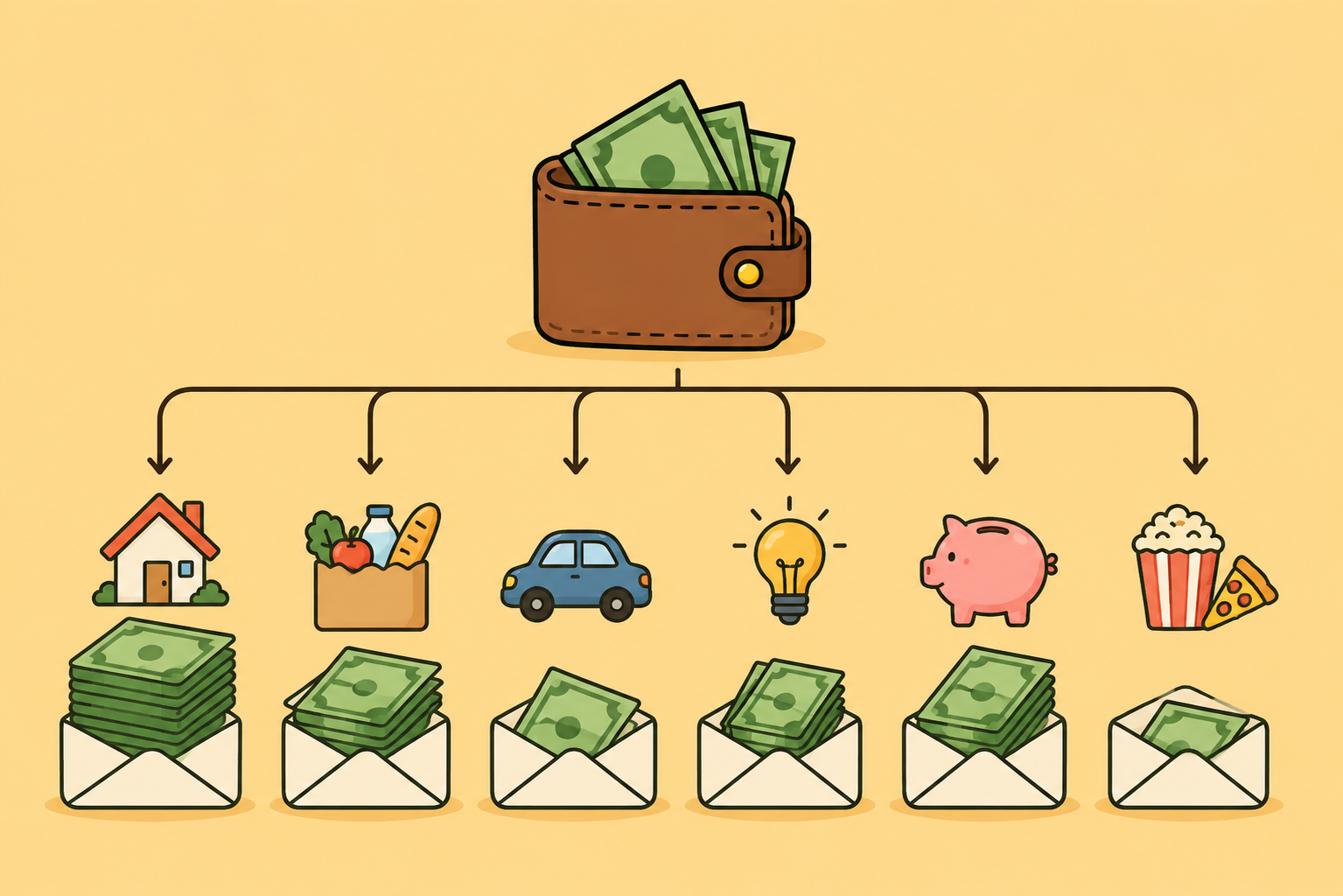
What is a sinking fund, and how is it different from emergency savings?
A sinking fund prepares for a cost you expect. Learn how it differs from emergency savings and how Fireball's Occasional budgets and rollover can help.
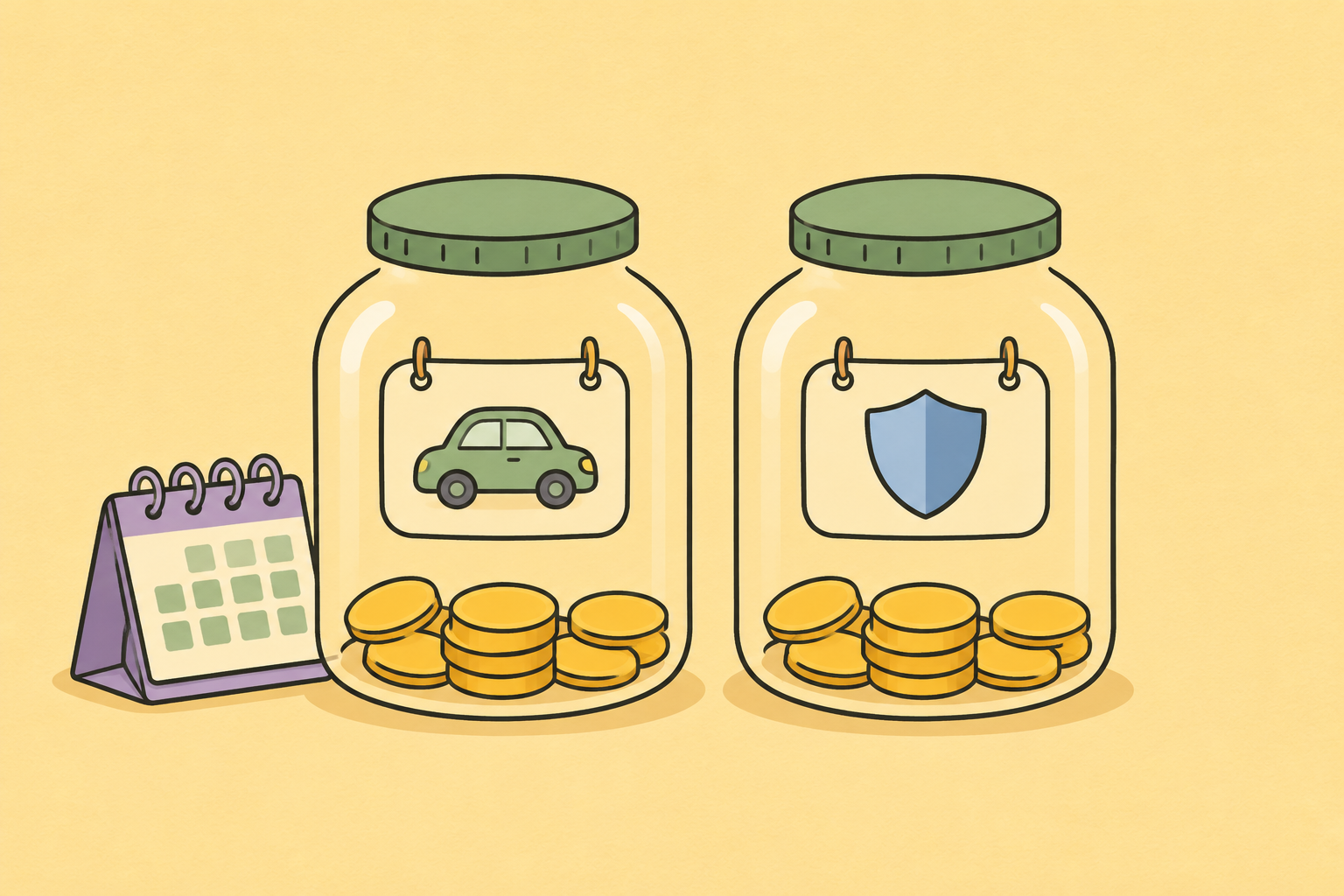
A sinking fund is money gradually set aside for a future cost you expect. Emergency savings are for urgent costs or income shocks you did not plan for. Car licensing, annual insurance and Christmas are possible sinking fund expenses. A sudden loss of income is a different kind of problem.
If you keep using your savings whenever an annual bill arrives, you may not be bad at saving. Your savings may be doing two jobs: preparing for known costs and protecting you from unexpected events.
Separating those jobs makes it easier to understand what the money is really available for.
What belongs in a sinking fund?
Think of expenses that are easy to forget during an ordinary week but likely to arrive eventually:
- Annual insurance or subscriptions.
- Car licensing, a warrant of fitness and servicing.
- School costs and planned activities.
- Christmas, gifts and an agreed holiday.
- A replacement you already know you need.
Include annual and less frequent costs in your spending plan, even when they are not due every payday.
The boundary is not perfect. You might build a general car maintenance reserve without knowing the next repair date. An urgent repair could still exceed it. The fund helps with foreseeable costs; it does not make emergencies impossible.
How much should you set aside?
Take the expected cost, subtract money already available for it, and divide the gap by the number of contributions before payment is due.
For example, an annual insurance bill is expected to be $1,200. You have $300 reserved and nine monthly contributions left. The remaining $900 needs $100 a month.
If the same bill is due in three months, the gap is still $900, but you need $300 a month. Dividing by twelve would not prepare you in time for this bill.
These are example amounts. Use your renewal notice or best available estimate, and update it when the real price arrives.
How can you do this in Fireball?
In Flex budgeting, Occasional is designed for expected costs that happen less often. Give the relevant category an amount for each budget period and review Roll over unspent.
With rollover enabled, unused budget carries into the next period. If you allocate $100 each month and have no spending against it, three periods build $300 of budget allowance, assuming no opening carry or other adjustments.
When the bill arrives, spending in the category uses that allowance. There is no need to treat paying a planned bill as a failure to save.
Fireball can also show an overspend carried into a later period. Check the carried amount rather than assuming rollover always increases what is available.
Is the carried budget the same as money in the bank?
No. A budget allocation is a plan, not a transfer, separate account or guarantee of cash.
If your budget shows $300 carried towards insurance but you have already spent the money elsewhere, the bill is not funded in real life. Review the relevant account balance and other commitments as well.
You can use a separate bank account if that helps you protect the money, but you do not need one new account for every budget category. The important part is that the cash supporting the plan remains available.
Do not count the same $300 as both insurance money and an untouched emergency reserve.
When should you use Plan expense instead?
Use an ongoing Occasional budget when you want to keep contributing over several periods.
Use Plan expense when a specific period needs a cost included without repeating that allocation in every future period. For example, shoes you intend to buy next week could belong in that week's plan if you do not want an ongoing clothing allowance.
In Flex, a new planned expense appears under Occasional for that selected period. If the category already has a budget, the entered amount replaces its usual amount for that period. Enter the full period total, not just an extra top up.
If you already have enough clothing budget for the shoes, do not add another allowance simply because the purchase is approaching. Review what is already covered first.
What if you cannot fund every future cost?
Start with a cost that has a reasonably clear amount and deadline. Calculate the gap honestly.
If you need $600 in six weeks but can spare only $20 a week, the plan will build $120, leaving $480 unfunded. A smaller contribution helps, but does not solve the full bill. You need another change, such as a different timing arrangement or a revised purchase, where possible.
The point is early visibility, not pretending every problem can be solved by saving a few dollars.
Keep emergency savings for their own job
You can build both kinds of savings, but give each amount one purpose. For help choosing an emergency reserve, read how much your emergency fund should be.
Then open Fireball and choose one expected cost that is missing from your current plan. Check the due date, work out the gap and give it a place in an upcoming period or an ongoing Occasional budget.
General educational information, not personal financial advice. Examples are illustrative.
Make the next money decision calmer
Turn what you just read into a plan you can track, adjust, and actually live with. Explore our free financial calculators or see how Fireball brings your finances together.