How to start investing in New Zealand outside KiwiSaver
A plain guide to how investing works in New Zealand outside KiwiSaver, covering managed funds, index funds, shares, fees and tax, and the questions worth answering before you start.

Investing outside KiwiSaver means putting money into funds or shares that you can reach before 65. Most people in New Zealand do it through a managed fund, an index fund or by buying shares directly. Before you choose any of these, it helps to understand the fees, the tax and how long you can leave the money alone.
Disclosure: this guide is published by Fireball, a budgeting app for New Zealand. It explains how investing works and what to weigh up. It is general information, not financial advice, and it does not recommend any investment, fund or provider. Everyone's situation is different, so for advice about your own money, talk to a licensed financial adviser. Tax rules were checked with Inland Revenue on 8 November 2026.
Why do people invest outside KiwiSaver?
KiwiSaver is built for retirement, so most of it is locked until 65. Inland Revenue says earlier withdrawals are limited to cases such as buying a first home or significant financial hardship.
People invest outside KiwiSaver for goals that fall before then. Common reasons include stopping work early, building a buffer for a career break, or saving for something more than five years away. If you are aiming for financial independence, the money outside KiwiSaver is what covers the years before 65. Our guide to working out your FIRE number explains how that gap is worked out.
What do people usually sort out before investing?
Investments go up and down, so many people get a few basics in place first.
- High interest debt. Credit card interest is often 20% or more a year. It is hard for an investment to reliably earn more than that.
- An emergency fund. If you have to sell investments after a fall to cover a surprise bill, you lock in the loss. See how much your emergency fund should be.
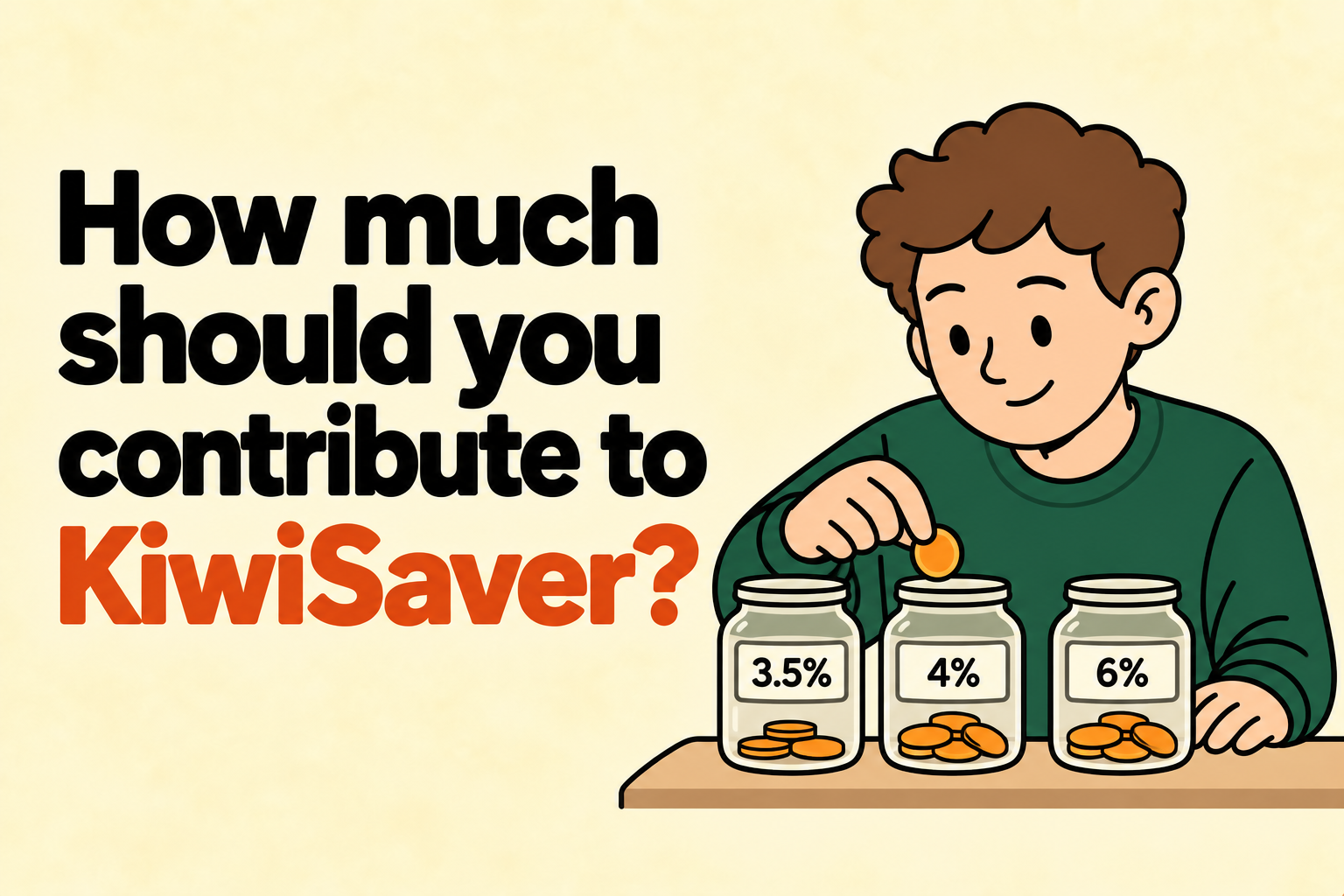
- Your KiwiSaver settings. If you are an employee, the employer match and the government contribution add to what you put in. See how much to contribute to KiwiSaver.
- Your timeframe. Money you need within a few years is usually kept in lower risk options, such as a savings account or term deposit.
These are common starting points, not rules. Your own priorities may be different.
What are the main ways to invest?
Managed funds
A managed fund pools money from many investors and invests it for them. Each investor owns a share of the whole fund. Most KiwiSaver funds work this way, and many providers offer similar funds outside KiwiSaver.
Funds range from defensive, which hold mostly cash and bonds, to aggressive or growth, which hold mostly shares. Higher growth funds tend to swing more in value. Over long periods they have historically returned more, but that is not guaranteed.
Index funds
An index fund is a kind of managed fund that tracks a market index, such as the largest companies in New Zealand or around the world. It does not try to pick winners, so its fees are usually lower than funds that are actively managed. Many index funds are listed on the NZX as exchange traded funds (ETFs).
Individual shares
You can buy shares in single companies through a share trading platform. That gives you full control, but your money rides on fewer businesses. One company having a bad year has a much bigger effect on you than it would on a fund that holds hundreds of companies.
Term deposits and bonds
These are lower risk options that pay a set rate of interest for a set time. They are often used for money needed in the next few years, or to balance riskier investments.
How do fees affect your returns?
Fees come out every year, whatever the market does, so small differences grow over time.
On a $20,000 balance, a fee of 0.25% a year costs about $50. A fee of 1.25% costs about $250. Over 20 years, with the balance growing, the gap can add up to many thousands of dollars.
Fees can include:
- Fund charges, a yearly percentage of your balance.
- Platform fees, charged by some apps on top of the fund's own charges.
- Transaction fees, charged when you buy or sell.
- Currency exchange fees, when you buy overseas shares.
Sorted's Smart Investor lets you sort and compare New Zealand managed funds by fees, investment mix and five year returns. Sorted notes that the returns it shows are after fees.
How is investing taxed in New Zealand?
This is a summary only. Check with Inland Revenue or a tax adviser if your situation is not simple.
PIE funds and your PIR
Most New Zealand managed funds and KiwiSaver funds are portfolio investment entities (PIEs). The fund pays tax for you at your prescribed investor rate (PIR). Inland Revenue says the rates for New Zealand residents are 10.5%, 17.5% and 28%.
Your PIR is based on your income in the last two tax years. Inland Revenue's PIR tool works it out for you, and you then give the rate to your fund. If you do not give your fund a rate, it uses 28%. If your rate is too low, you may have tax to pay at the end of the year.
Shares you hold directly
Inland Revenue says dividends are taxable income, including dividends from overseas companies. Gains when you sell are usually not taxed if your main purpose when you bought the shares was not to sell them, such as holding them for dividends or for the long term. If you bought mainly to sell, the gain is taxable. Inland Revenue suggests keeping records from the time you buy to show your purpose.
Overseas shares and the $50,000 rule
If your overseas shares cost you more than NZ$50,000 in total to buy, the foreign investment fund (FIF) rules may apply. Inland Revenue says these rules change how those shares are taxed. Certain Australian listed shares are exempt, and Inland Revenue has a tool to check which. The threshold is based on what you paid, not what the shares are worth now.
New Zealand based funds that invest overseas generally deal with this tax inside the fund, which is one reason some people prefer them.
How do you check a provider is legitimate?
New Zealand managed fund providers must give you a product disclosure statement (PDS) that explains the fund's risks, fees and holdings. You can look up providers on the Financial Markets Authority website, which also keeps a list of warnings about scams.
Be wary of anyone who promises high returns with little risk, pressures you to decide quickly, or contacts you out of the blue.
Questions to answer before you start
Many people find it helps to write down answers to these first.
- What is this money for, and when will I need it? Money needed in two years and money needed in twenty years often belong in different places.
- How would I feel if it dropped 20% in a year? Falls of that size have happened in share markets. Knowing your answer helps you pick a fund type you can stick with.
- How much can I invest each month without touching my emergency fund? Small, regular amounts are common, and they mean you are not trying to guess the best time to buy.
- What will it cost, all in? Add up fund charges, platform fees and transaction fees.
- Do I need personal advice? A licensed financial adviser can look at your whole situation, which a general guide cannot.
How Fireball can help
Fireball is our own app, so treat this as a description.
Fireball does not give investment advice or recommend funds. It helps with the parts that come before and around investing. It shows how much you actually save each month, so you can see what you could put aside. It shows supported investment and KiwiSaver balances beside the rest of your net worth. Its financial independence projection separates savings you can reach from KiwiSaver, so you can see how much you may need outside KiwiSaver to stop work before 65.
Common questions
How much money do you need to start investing in New Zealand?
Many managed funds and platforms have low or no minimums, so it is possible to start with small amounts. What matters more is that you can leave the money invested and that fees do not take a large share of a small balance.
Is an index fund better than a managed fund?
An index fund is a type of managed fund. It tracks a market rather than trying to beat it, and usually has lower fees. Whether it suits you depends on your goals and preferences. This guide does not recommend one over the other.
Do you pay tax on investment gains in New Zealand?
It depends on how you invest. PIE funds pay tax for you at your PIR. For shares you hold directly, dividends are taxed. Gains are usually not taxed unless you bought mainly to sell, and overseas shares that cost more than $50,000 may fall under the FIF rules.
What PIR should I use?
Your PIR is 10.5%, 17.5% or 28%, based on your income in the last two tax years. Inland Revenue's PIR tool works it out. If you do not give your fund a rate, it uses 28%.
Should I invest or pay off debt first?
It depends on the interest rate and your situation. Credit card interest is usually higher than investments reliably earn. For a mortgage, see should you pay off your mortgage or invest. A licensed adviser can help you weigh it for your own circumstances.
Is investing outside KiwiSaver risky?
All investments carry some risk, and their value can fall as well as rise. Funds that hold more shares tend to move more in the short term. A fund's product disclosure statement explains its risk level.
The short answer
Investing outside KiwiSaver gives you savings you can reach before 65, usually through managed funds, index funds or shares. Before you start, it helps to know your timeframe, what you will pay in fees and how the tax works. This guide explains how investing works but cannot tell you what to invest in. For that, talk to a licensed financial adviser.
Make the next money decision calmer
Turn what you just read into a plan you can track, adjust, and actually live with. Explore our free financial calculators or see how Fireball brings your finances together.